














|
It is imperative to listen to the public opinion and attend to their needs. Huge investment has been put on education to solve the bottleneck problems so as to represent the utmost social equality, which lays a solid foundation for building the harmonious society. The past five years have witnessed a historical leap in Guangdong's education.
The Provincial Government, as the engine for higher education in Guangdong, invested 30 billion yuan to build Guangzhou Higher Education Mega Center, enrolling 120,000 students in the first three years. According to the latest statistics from the Department of Education of Guangdong Province, the number of university students on campus has totalled 1.5242 million and the gross enrollment rate increaseed from 14% in 2001 to 24% in 2006 (the national gross enrollment rate at 22%).
Since the autumn of 2005, Guangdong has launched an initial pilot project in 16 key poverty-stricken counties,which provides 1.33 million village students with free compulsory education, exempting them from a total fee of 440 million yuan. Free compulsory education in the province-wide villages was launched in the fall of 2006. Guangdong again took the lead in China by investing 3.345 billion yuan. Another 1.077 billion yuan has been granted by the government to exempt village students receiving free compulsory education of their textbook fees. Another appropriation of 46 million yuan is given to 130,000 students in urban and township families under the Minimum Social Security mechanism to cover their miscellaneous and textbook fees.
That indeed marks the first step of free compulsory education in Guangdong cities and villages, giving children the same opportunities in life. The objective in 2011 is to comprehensively realize free compulsory education in towns and villages and universal senior secondary education.

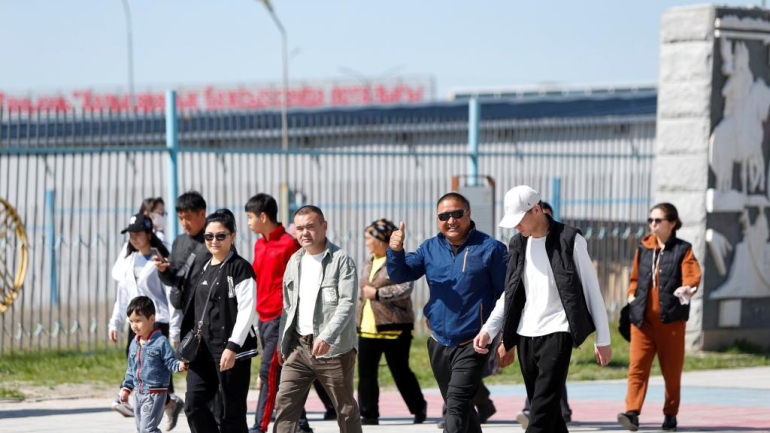
Starting from the next year, a new system of fund-raising and compensation by two grades will be initiated. Farmers pay 10 yuan per year to guarantee a minimum medical reimbursement ceiling of 10,000 yuan, while if they pay 20 yuan annually, the ceiling will reach 30,000 yuan. IT application is to be widely deployed in the province, which means, in specific, the essential realization of Just-In-Time compensation. So farmers are freed from the lengthy procedure in which they have to pay in full first and receive reimbursement later. Now it's enough that they simply pay the medical fee on their part. To encourage farmers to get medical care in grassroots hospitals, from next year on, the reimbursement ratio for inpatient fee in town hospitals will be 50% at its minimum; 40% for county hospitals.
The participating rate for the New Rural Cooperative Medical System (CMS) was less that 30% in Guangdong in 2003 and it jumped to 83.8% this year. The reason is the greater fund support from governments at all levels. Between 2003 and 2006, the total subsidy from Provincial Government to CMS only amounted to 990 million yuan; however, with the priority given by the Provincial Party Committee and Provincial Government, 1.2 billion yuan has been allocated this year to raise the per capita subsidy for CMS participating farmers in underdeveloped regions from 25 yuan to 35 yuan.
Minimum social security serves as the last defense in social relief as well as a guarantee for people in poverty. As an economic power in China, Guangdong Province has experienced a historic breakthrough in terms of social security over the past 5 years, achieving the goal of covering all those meeting the standards of minimum social security into the system.
Over the past 5 years, social welfare has been rendered to about 1.71 million people in line with the standard of social security. The five years also witnesses continuous improvement in state comfort and compensation system. Free training is provided to demobilized soldiers, with a view to establish a state comfort and compensation system with both material and spiritual support. The public-interest project is shining upon the lives of those in need.
Besides covering all those meeting the minimum social society standard, efforts have also been made by Guangdong Province to explore the dynamic management of minimum social security, so as to make full use of social security funds and guarantee due welfare for everyone in need.
Facts
The number of students on campus reaches 1.5242 million in 2006, with a gross enrollment rate of 24%.
90% farmers enjoy medical insurance.
1.71 million people meeting the standard of minimum social security system have been covered over 5 years.
Guangdong's rapid economic growth is attributed to its transforming the mode of economic development. Five years of initial implementation of the concept of scientific development gives the province a new appearance. Its traditional growth pattern characterized by huge fixed asset investment, fast economic growth, high energy consumption and heavy pollution has changed into a brand-new pattern marked by low input, low energy consumption and light pollution, coupled with high growth rate, high efficiency and a steady increase of people's income both in urban and rural areas.
Editor: 寮犺幑
|