

















U.S. Secretary of Defense Lloyd Austin on Saturday discussed the situation in Russia with defense ministers from Canada, France, Germany, Poland and the United Kingdom.
"The United States will stay in close coordination with Allies and partners as the situation continues to develop," the U.S. defense department said in a readout.
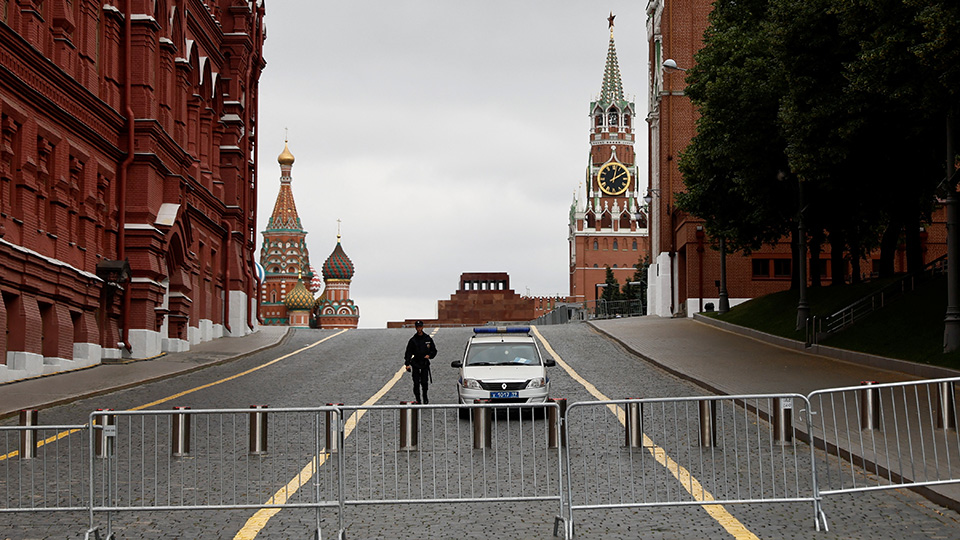
Russian tycoon Yevgeny Prigozhin called off a rebellion by his Wagner mercenary group on Saturday in a deal brokered by Belarusian President Alexander Lukashenko.
Russia will drop criminal charges against Prigozhin and he will "go to Belarus," Kremlin spokesman Dmitry Peskov said, adding that Wagner's soldiers will not face prosecution.
Russian President Vladimir Putin thanked Lukashenko for mediating the agreement.
Wagner forces had reached the city of Lipetsk, some 450 kilometers south of Moscow, before Prigozhin ordered everyone back to their camps. Prigozhin and other Wagner troops were seen leaving the headquarters of Russia's Southern Military District in Rostov-on-Don, which they had seized.
Prigozhin began the rebellion on Friday after accusing Russia's military of launching a missile attack against his troops in Ukraine. Russian authorities denied it happened.
With tensions easing, the Kremlin announced it would end a counterterrorism operation that put troops and military vehicles on the streets of Moscow.
Belarus says Wagner chief has agreed to de-escalate situation
The office of Belarusian President Alexander Lukashenko said on Saturday that he had brokered a deal with Wagner chief Yevgeny Prigozhin who had agreed to de-escalate the situation.
The announcement, carried on the official Telegram channel of the Belarusian presidency, said Prigozhin had agreed to halt the further movement of Wagner fighters across Russia.
(With input from Reuters)
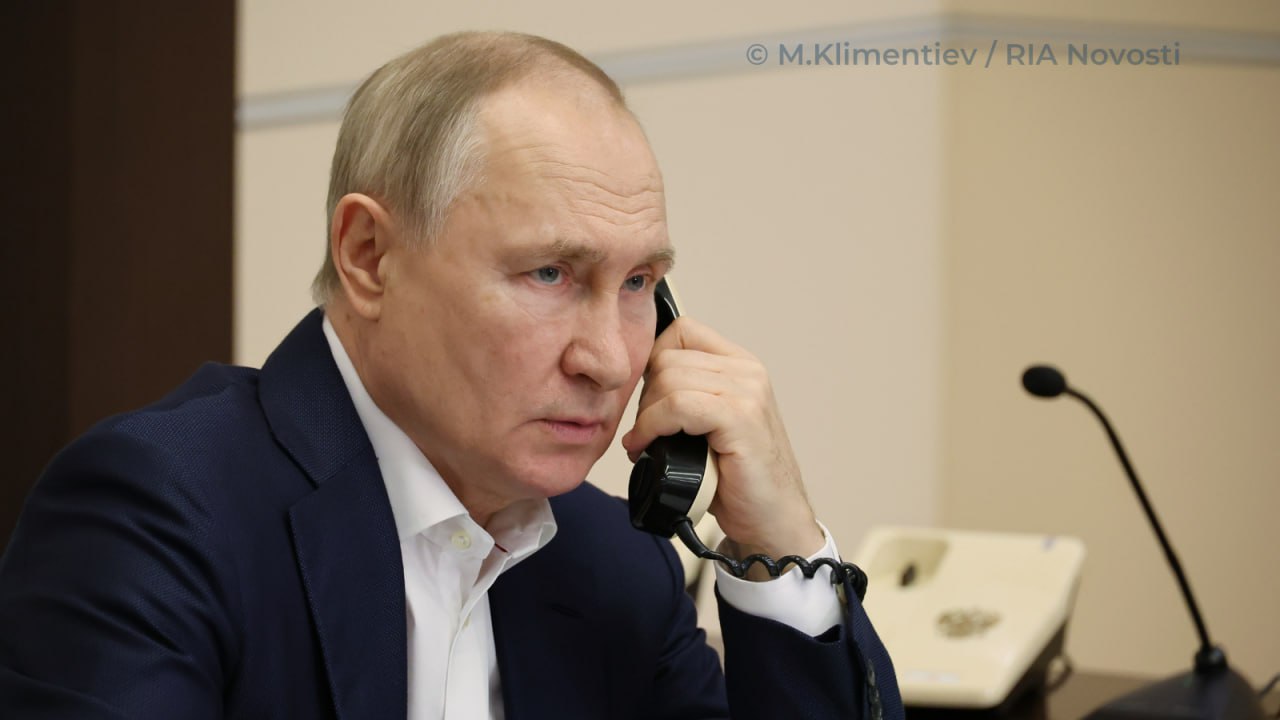
President Vladimir Putin has been speaking to his allies by phone amid the mutiny of Wagner mercenary forces in Russia. /Russian Ministry of Foreign Affairs/via telegram
The President of Belarus Alexander Lukashenko is claiming the Wagner Group has agreed to de-escalate and stop its troops moving across Russia. The office of Lukashenko said that he had brokered a deal with mutinous Russian mercenary leader Yevgeny Prigozhin, in a post on its official telegram account.
The conversation between Prigozhin and Lukashenko is believed to have been sanctioned by Putin. There has been no confirmation from the Kremlin but Reuters reported that Prigozhin has released a voice message saying to avoid 'bloodshed' he has ordered his troops to return to their bases.
President Vladimir Putin spoke directly to several of his allies by telephone on Saturday in a bid to reassure leaders with close ties to the Kremlin over an armed mutiny launched by Russia's Wagner Group.
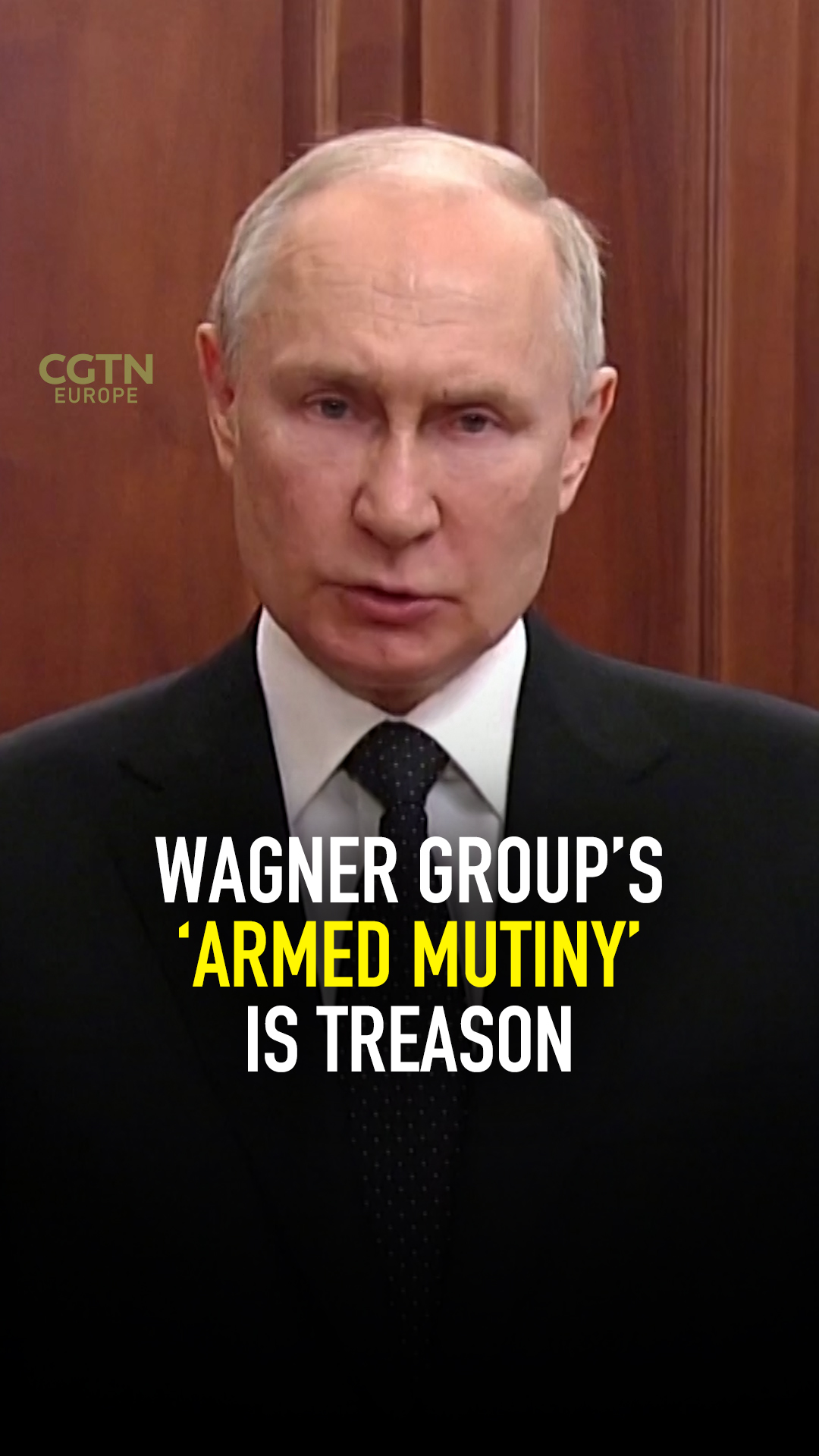
Speaking in an emergency televised address on Saturday, Putin described the Wagner Group's overnight bid to seize Rostov-on-Don and summon Moscow's military commanders as "treason," saying anyone who had taken up arms against the Russian military would be punished.
After his address, he discussed the situation with President Recep Tayyip Erdogan by phone.
The Kremlin later said that the Turkish leader had backed the Russian government's handling of the mutiny during the conversation.
The Turkish presidency briefed separately that the two had discussed the developments, Erdogan telling the Russian president that Ankara was ready to do its part to help bring about a peaceful resolution.
"In the conversation, it was emphasized that no one should exploit the situation in Russia," it said.
Putin also spoke with Belarus's President Alexander Lukashenko, Kazakhstan's Kassym-Jomart Tokayev, and Uzbekistan's Shavkat Mirziyoyev, the Russian leader's closest regional allies.
Belarus' Security Council stressed that Minsk - which has allowed Moscow to launch troops into Ukraine from inside its border - remained an ally, warning that internal disputes were "a gift to the collective West."
The Kazakh president's office said Tokayev noted the events were "an internal affair of Russia."
Vowing to crush an armed mutiny he compared to Russia's Civil War a century ago, Putin is facing the first serious challenge to his power of his 23-year rule.
However, the Wagner mercenary's mutiny comes amid a complete breakdown in support and communication between the Russian leader and many of his Western counterparts.
Western response
While the majority of Western states remained quietly diplomatic on the developments in Russia, Ukraine's President Volodymyr Zelenskyy celebrated the drive to oust Moscow's military command as a sign of the country's weakness.
"Anyone who chooses the path of evil destroys themselves," said the leader on Saturday. "For a long time, Russia used propaganda to mask its weakness and the stupidity of its government. And now there is so much chaos that no lie can hide it."
"Russia's weakness is obvious. Full-scale weakness," he added.
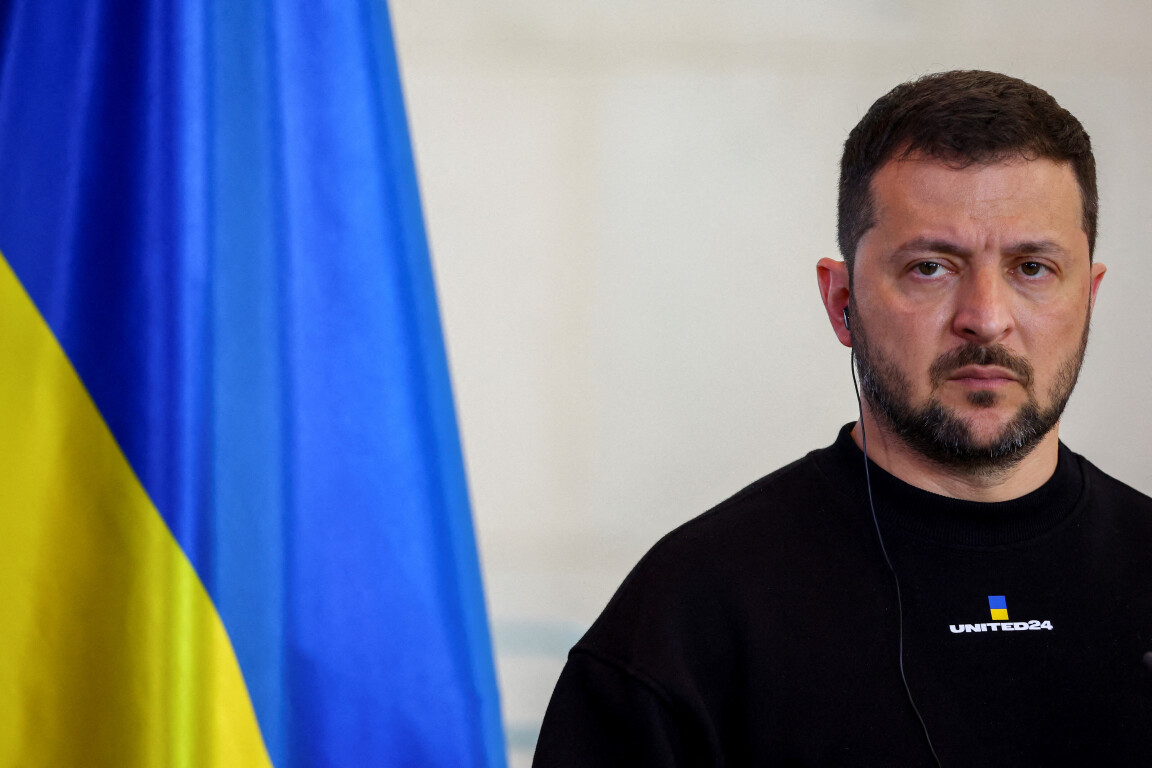
Ukraine's President Volodymyr Zelenskiy said the mutiny in Russia showed the country was weak. /Fabrizio Bensch /Reuters
The White House said U.S. President Joe Biden had been briefed on the situation and spoken with the leaders of France, Germany and the UK, who had reaffirmed their "unwavering support" for Ukraine.
A NATO spokesperson said the Western military alliance was "monitoring the situation," while both Germany and the UK's government crisis teams met on Saturday.
British Prime Minister Rishi Sunak told the BBC after the emergency COBRA meeting that he was "keeping a close eye on the situation as it is evolving on the ground as we speak... the most important thing I would say is for all parties to be responsible and to protect civilians."
Commenting on developments in the field, Britain's defense ministry had earlier reported that Wagner troops in Russia were "almost certainly aiming to get to Moscow."
Russia's neighbors, Ukraine's allies
Countries that neighbor Russia but who support Ukraine in the conflict, including Poland, Estonia, and Latvia said they had strengthened their border security. Latvia added it had blocked visa and border entry to Russians amid the escalation.
Czechia's foreign minister Jan Lipavsky warned of "the possible threat of erosion of the security situation" in Russia, "especially for citizens of EU and NATO countries."
Lithuania's President Gitanas Nauseda said that the situation would only encourage NATO to strengthen its "deterrence and forward defense capabilities": "Today's events in Russia may mean a moment of respite for Ukraine. For us, it is necessary to prepare for the most unexpected scenarios."
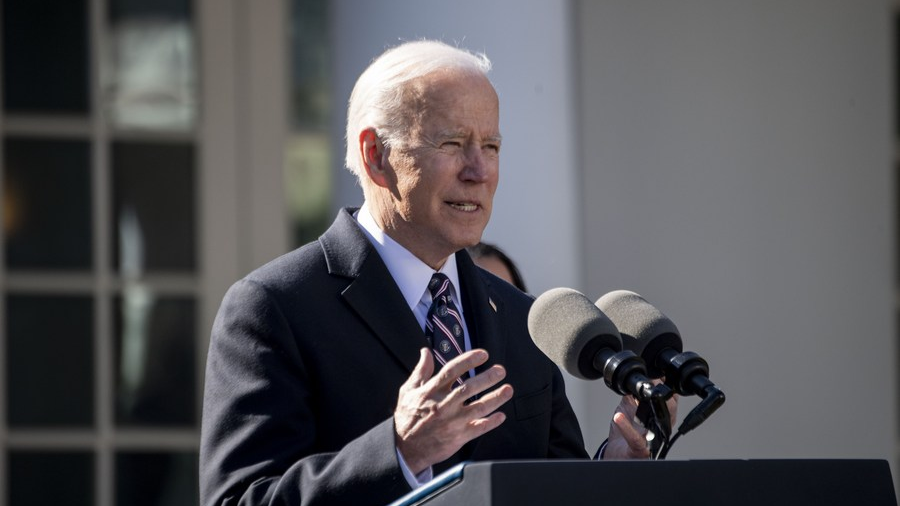
FILE PIC: The U.S. President Joe Biden. /Xinhua
U.S. President Joe Biden on Saturday spoke by telephone with the leaders of France, Germany and the United Kingdom, the White House said.
Biden and his European counterparts discussed "the situation in Russia," a White House statement said.
Mutinous mercenary fighters are heading towards Moscow after seizing a southern Russian city overnight on the orders of the powerful Wagner chief Yevgeny Prigozhin, who has launched what President Vladimir Putin called an 'armed mutiny' in Russia.
The Russian leader has vowed to crush Prigozhin's uprising, the country's first armed insurrection in decades.
But who exactly is the former hot-dog-seller-turned-militia-leader, and why is his private army facing off against Russia's military?
What is the Wagner group?
Sometimes called a mercenary group, sometimes referred to as a proxy force, it is essentially a private army. It was founded in 2014 by Yevgeny Prigozhin – a former associate and ally of Putin - when it backed pro-Russian forces in eastern Ukraine.
Wagner is thought to have around 50,000 troops in Ukraine, with the U.S. estimating that around 80 percent of them were recruited from Russian prisons.
However last year it registered as a company and now openly recruits - with adverts seen on billboards across the country.
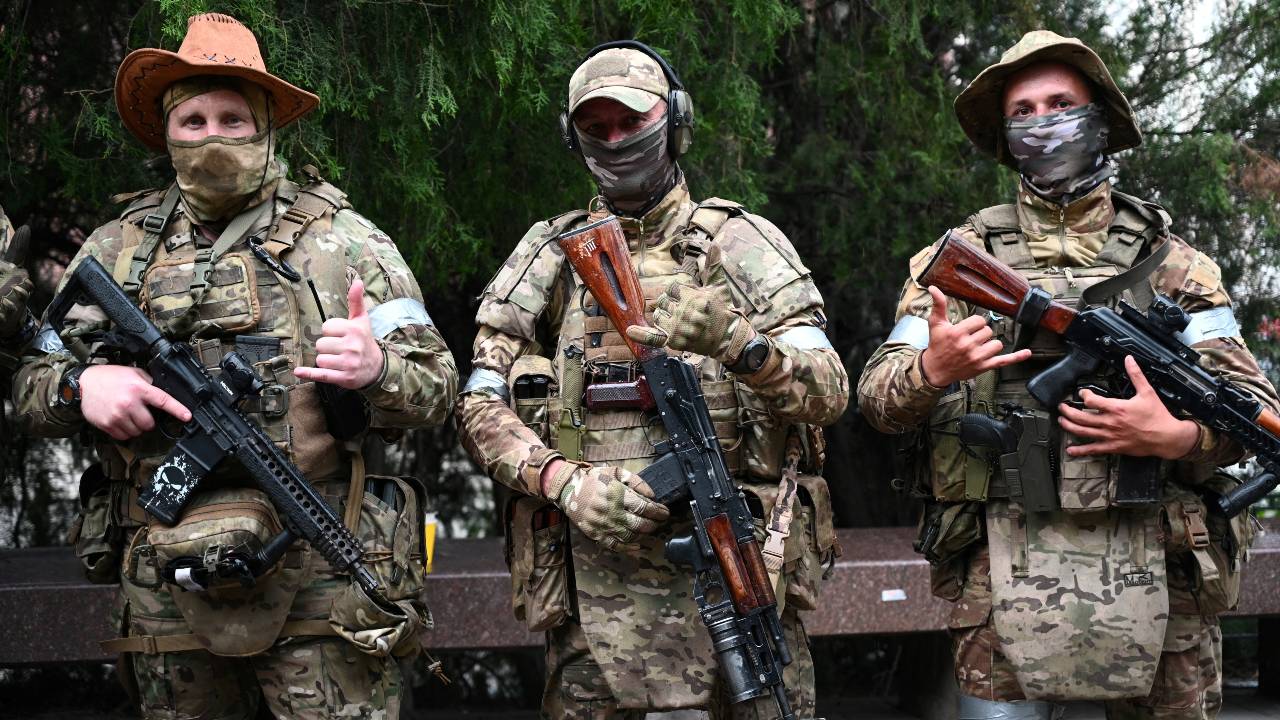
Fighters of Wagner private mercenary group pose for a picture as they get deployed in the Russian city of Rostov-on-Don. /Stringer/Reuters
Wagner also has a global footprint. Its fighters has fought in Libya, Syria, the Central African Republic and Mali among others. But Prigozhin has accused the Kremlin of abandoning some conflicts in Africa and pocketing the money, something the defense ministry has denied.
Last month the group seized the eastern Ukrainian city of Bakhmut after some of the conflict's most brutal fighting, but Prigozhin has been highly critical of Moscow's top military commanders throughout the campaign.
Who is the group's founder Yevgeny Prigozhin?
Famous for his aggressive PR style, visceral language and a frequent presence near the front lines in Ukraine, Prigozhin is one of the most visible faces of the Ukraine conflict, having allegedly recruited thousands of Russian prisoners to fight for Wagner.
After serving a long prison sentence in the 1980s, Prigozhin started out selling hotdogs in his hometown of St. Petersburg. He soon began to build up a stake in a chain of supermarkets, and eventually opened his own restaurant and catering company.
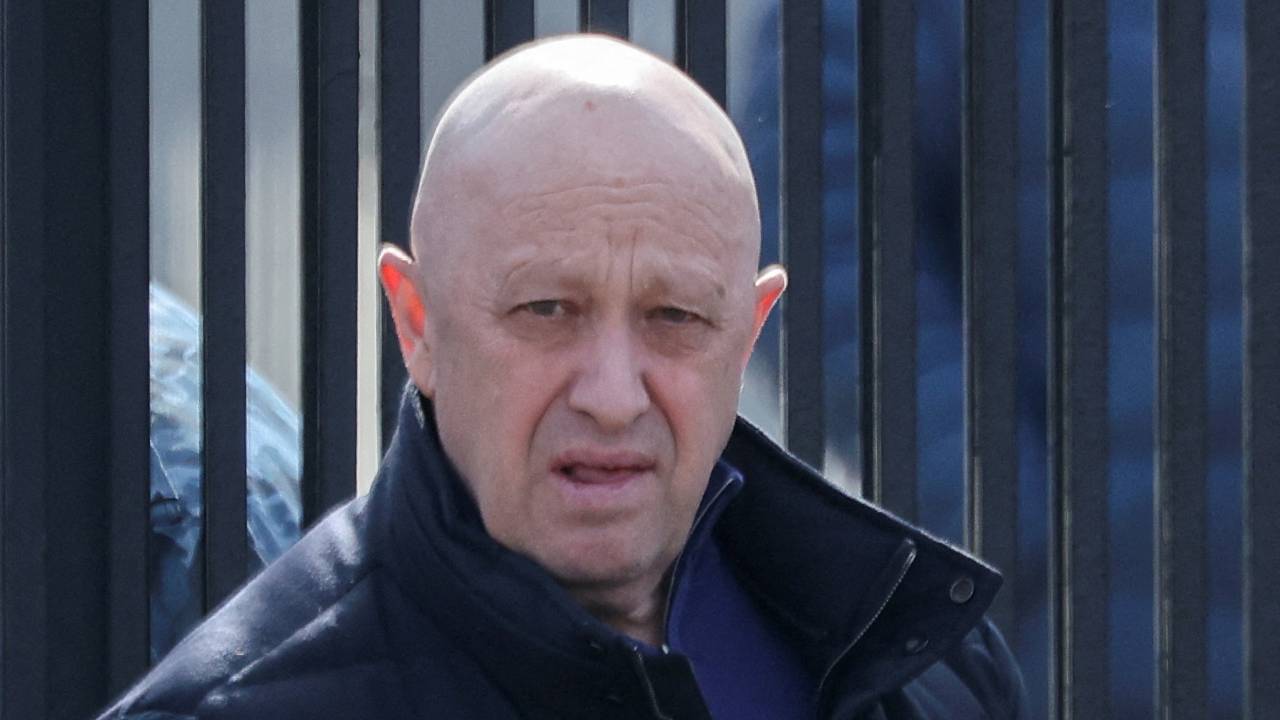
Founder of Wagner private mercenary group Yevgeny Prigozhins started out as a hot dog salesman. /Yulia Morozova /Reuters
His restaurant gained a reputation for its fine food and was soon hosting dignitaries including then St Petersburg deputy mayor Vladimir Putin. From there, Prigozhin's catering firm Concord began to win government supply contracts, taking its operations to a much bigger level.
The 62-year-old would later come to be known as "Putin's chef" due to the Kremlin catering contracts. It's unclear how friendly he and Putin are, but he had previously been portrayed as a close ally of the Russian president.
While Prigozhin has shied away from criticizing the Russian president, he has been relentless in his anger towards Russia's military leadership, in particular Defense Minister Sergei Shoigu and Chief of the General Staff Valery Gerasimov despite new Russian legislation banning public criticism of the campaign.
Why is his private army facing off against Russia's military?
On Friday, Prigozhin accused Russian troops of launching a rocket attack that killed scores of his fighters, triggering him to order what he calls a "march for justice" to remove corrupt and incompetent commanders he blames for botching the Ukraine conflict.
Having already captured the Russian city of Rostov-On-Don by Saturday and setting off on an 1,100 kilometer race to Moscow, it is a serious escalation in the feud between the Wagner boss and Russia's military. But tensions have been building for months.
Prigozhin has repeatedly railed against the regular army's top brass, accusing generals of incompetence and withholding ammunition from his fighters. In one of his most memorable video from early May, Prigozhin showed a field of dead Wagner mercenaries who he said had perished due to a lack of munitions caused by Shoigu and Gerasimov.

This month, he went so far as to defy orders to sign a contract placing his troops under the command of the Russian Defense Ministry, despite Putin backing the order. To do so would have made it harder for Prigozhin to build his own political and military influence, something he has spent months doing while receiving military hardware and ammunition from the army.
Putin's intervention on the defense ministry's side left Prigozhin in a difficult position, as the ministry has said that such contracts are required to give volunteer groups the "necessary legal status" to operate. He had said earlier in June that he was not sure if his men would even continue to fight in Ukraine amid the bitter standoff with the Defense Ministry.
Adding fuel to the fire on Thursday, Prigozhin accused Russia's military leadership of lying to Putin and the Russian people about the scale of Russian losses and setbacks in Ukraine.
"Total trash is being put on the president's desk. Shoigu and Gerasimov have a simple approach. The lie must be monstrous for people to believe it. That is what they are doing," he said in one message.
On entering Rostov this weekend, the mercenary leader said, "We came here to stop the disgrace in the country that we live in," before adding: "We are saving Russia."
Putin hosted an unscheduled televized address saying: "Those who staged the mutiny and took up arms against their comrades – they have betrayed Russia and will be brought to account."
Moscow mayor urges people to refrain from trips around the city
Moscow Mayor Sergei Sobyanin on Saturday asked people to refrain from trips around the city as far as possible given a counter-terrorism operation had been declared and said the situation was "difficult."
Sobyanin also said in a statement that Monday would be a non-working day.