

















Pakistani Prime Minister Shehbaz Sharif paid an official visit to China in early June, including a visit to Shenzhen, Guangdong Province, to foster further collaboration.
GDToday conducted an exclusive interview with Ms Zoon Ahmed Khan, a Pakistani research fellow at the Center for China and Globalization (CCG) and a visiting fellow at the Belt and Road Strategy Institute at Tsinghua University.
Ms Khan shared her views on Mr. Sharif's priorities during his visit to China, namely the impact of the China-Pakistan Economic Corridor (CPEC), and the potential collaboration between the Guangdong-Hong Kong-Macao Greater Bay Area and Pakistan.
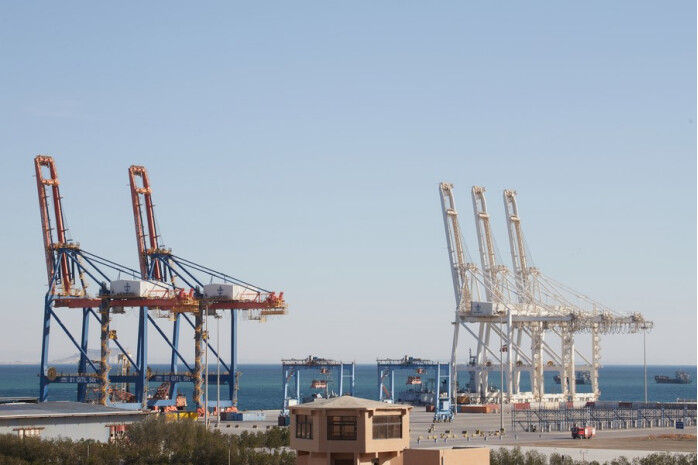
A view of the Gwadar port in southwest Pakistan's Gwadar, Dec. 4, 2023. (Photo: Xinhua)
Phase two of CPEC will be PM Shehbaz's main focus of his visit
As the two countries have established an all-weather strategic cooperative partnership, “the main focus of Prime Minister Shehbaz's visit is phase two of CPEC,” noted Ms Khan.
As the pilot project of the Belt and Road Initiative (BRI), CPEC phase two is what Pakistan really wants to attract businesses and utilize successful infrastructure projects carried out so far in Pakistan under the CPEC.
Mr. Shehbaz has been the chief minister of Punjab Province, the country's biggest province with about 50% of the country's population. During his post in 2015, the first phase of CPEC projects was accomplished.
According to Ms Khan, as a direct consequence of CPEC projects, about 250,000 new jobs have been created. The $26 billion investment received by Pakistan from China, compared to various other sources of aid or investment from other parts of the world, has had a direct impact on the Pakistani economy.
"We want to produce more. We want to encourage industrialization of the country," added Ms Khan. "That is possible if more business-level interactions like these happen." Therefore, in her view, Prime Minister Shehbaz's visit to China can help expedite and encourage those exchanges.
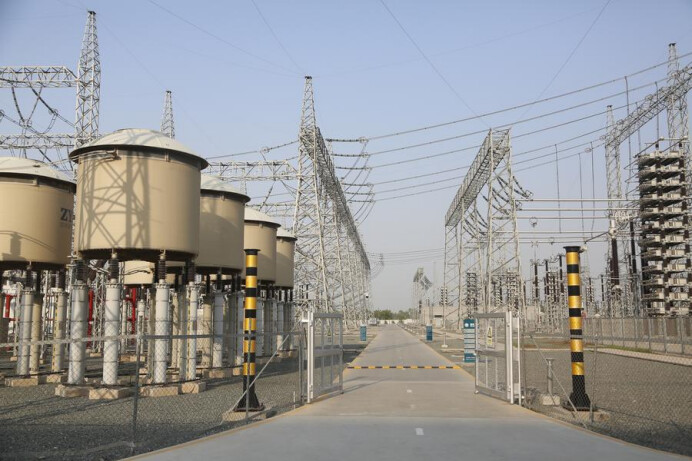
A view of the ±660kV Matiari-Lahore high-voltage direct current transmission project under CPEC on the outskirts of Lahore, Pakistan, July 3, 2023. (Photo: Xinhua)
BRI meets the demand of developing countries to have better infrastructure
Regarding doubts and questioning about BRI, Ms Khan emphasized that the initiative fulfills the demands of developing countries for improved infrastructure.
"BRI was introduced at a time when traditional financial institutions, due to political, economic, and strategic reasons, were not fulfilling that role," she pointed out.
Using Pakistan as a key example, she noted that CPEC, which has been implemented for a decade or so, has brought about dramatic changes to Pakistan.
With $26 billion invested by China, the Pakistani government has allocated funds to energy and transportation infrastructure, addressing critical areas that were in dire need of attention. As a result, the country now boasts 800-900 kilometers of new roads and highways, an additional 8,000 megawatts in the national grid, and an operational Gwadar Port for transit trade.
Considering the severe energy crisis, Pakistan has initiated some significant projects in sustainable, renewable energy thanks to the projects under CPEC. Ms Khan admitted that these projects would have been impossible for Pakistan to undertake without coordination with China.
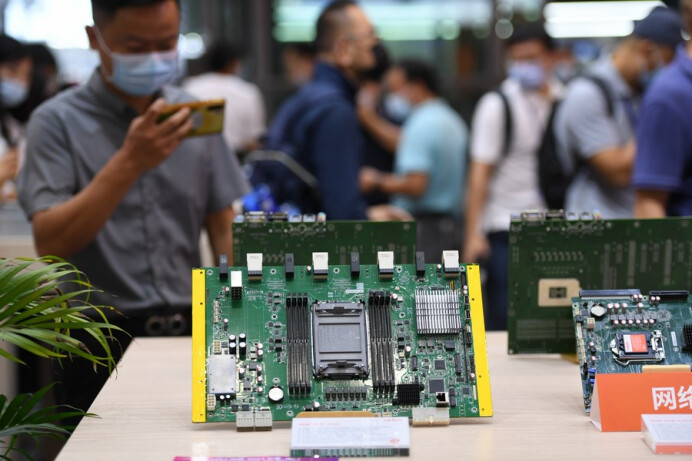
Visitors watch exhibits at the 10th China Information Technology Expo in Shenzhen, south China's Guangdong Province, Aug. 16, 2022. (Photo: Xinhua)
GBA and Pakistan can collaborate on IT
PM Shehbaz Sharif arrived in Shenzhen on Tuesday, a city renowned for its advanced information technology, to kick off his five-day official visit to China aimed at further strengthening bilateral ties.
Information technology is one of the sectors in Pakistan that requires the least investment but enjoys the fastest growth. It brings in foreign earnings at a pace that no other sector can currently compete with.
According to Ms Khan's observation, despite agriculture being the main concern in terms of socioeconomic impact, Pakistan has a very young and technologically savvy generation. Prime Minister Shehbaz Sharif established the Information Technology University in Punjab about a decade ago.
"Shenzhen can be very attractive, especially for Pakistan, to encourage investment," added Ms Khan. "The city has some of the leading and most cutting-edge industries.'
Having attended the Drone World Congress in Shenzhen multiple times, she said that drones have changed the way various activities are carried out, from agriculture and humanitarian aid to food deliveries and emergency responses. Pakistan has shown interest in manufacturing drones.
Ms Khan detailed the challenges of scaling up more advanced sectors in Pakistan rather in a sporadic manner now, technology transfer and professional training. Given the relatively young and inexpensive labor in Pakistan, these issues remain at the forefront of further cooperation between GBA and her country.
The Pakistani research fellow proposed a recommendation: train the young labor force and encourage industries to relocate to Pakistan's special economic zones in an effort to develop them. "This can be beneficial for industrialists because we have cheaper labor and access to different markets," Ms Khan added.
Reporter: Zhang Ruijun
Video: Qin Shaolong
Poster: Mia Lai
Editor: Olivia, Steven Yuan, Monica Liu, James