

















On June 26, engineer Mr. Wen was caught in an accident overseas, which caused 40 percent of his body to suffer second- to third-degree burns.
Wen needed immediate treatment, yet the local hospital had limited resources to help. He had to go back to China without delay.
Wen’s company soon contacted the local Chinese Embassy and sought help from Guangzhou Red Cross Hospital (GZRCH). On receiving the message, the hospital opened a green channel for burns emergency and implemented telemedicine for Wen.
Li Xiaojian, director of the Department of Burn and Plastic Surgery of GZRCH, who has specialized in his field for over 30 years, and his team received the patient.
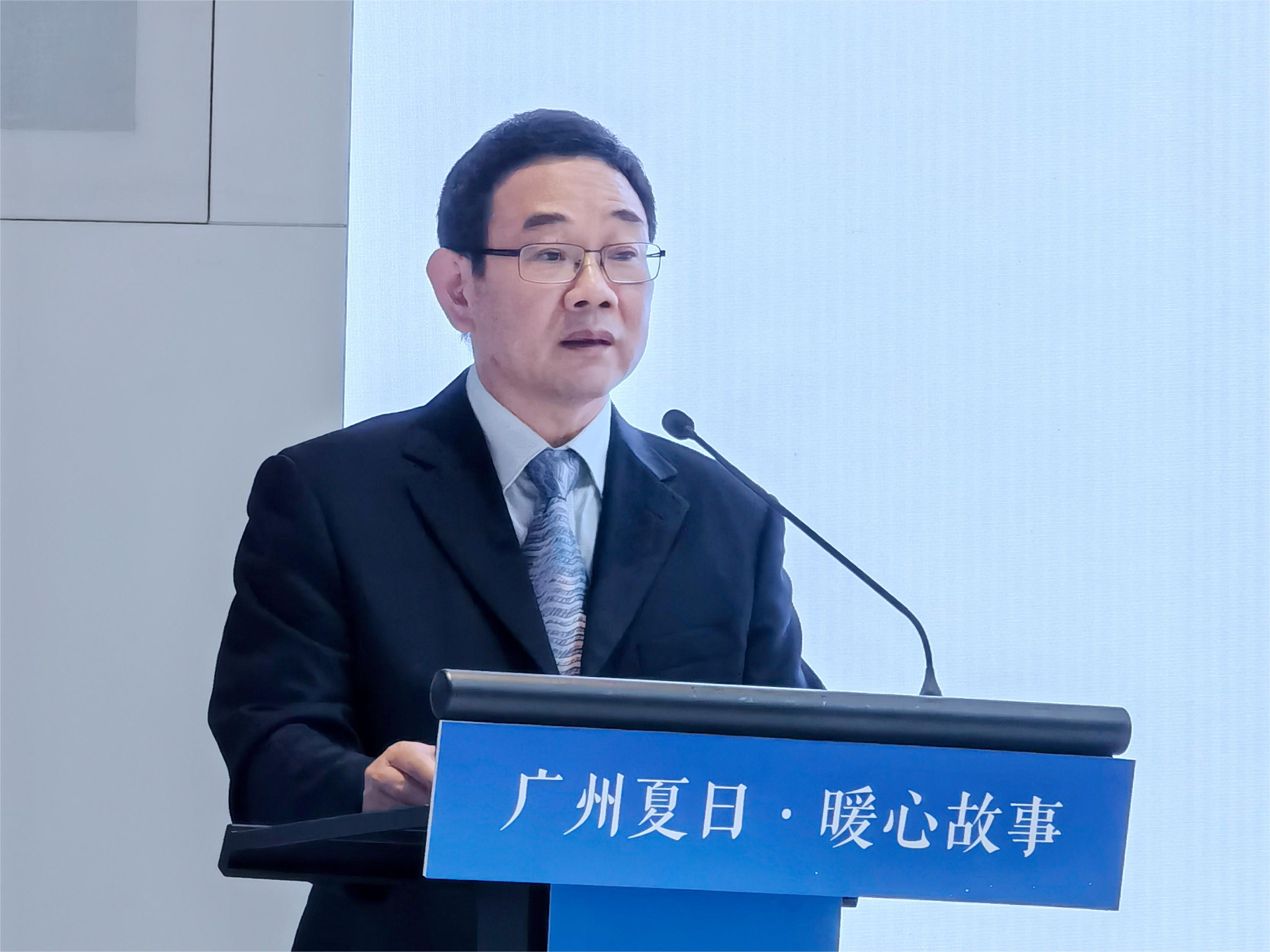
Li Xiaojian shared the story of burns rescue at a story-sharing meeting in Guangzhou on August 18. (Photo provided to GDToday)
At 5 a.m., June 30, Wen was transferred to the hospital’s Burn Intensive Care Unit (BICU) when he landed in Guangzhou. It had been four days since Wen was injured, and he had developed sepsis and dysfunction of the heart, lungs, kidney, and intestines. Without immediate treatment, he would have suffered worsened infection, followed by septic shock and multiple organ failure.
Fortunately, after being treated in the hospital for a month, all of Wen’s burnt injuries healed. He was well enough to be discharged from the hospital and return to his hometown, Shijiazhuang, the capital of north China’s Hebei Province. He would return to the hospital for further rehabilitation and scar treatment.
According to Li, the green channel played a critical role during the rescue. Back in 2018, the hospital received an extremely-burnt Chinese patient transferred from Indonesia. It was the first international air rescue in Guangdong that had seamlessly transferred a Chinese patient to a local hospital.
In 2019, the GZRCH became one of the first pilot hospitals for air rescue. In 2021, the hospital and other departments set up a training base for air rescue in Guangzhou, formulating cooperation featuring medicine, aviation, and command, which can improve efficiency for major emergency rescue.
Li said that his department receives over 200 patients with severe burns each year. With the holistic rescue that covers from first aid to rehabilitation, over 90 percent of patients with burns can return to normal life after recovery.
Earlier in July, a project of the holistic rescue system for burns in Guangzhou was officially launched, and the GZRCH led the establishment of a league for the rescue project.

A project of the holistic rescue system for burns in Guangzhou was officially launched. (Photo provided to GDToday)
“No matter where you are, no matter what difficulties you encounter, we will certainly have the ability and will do everything we can to help,” Li said.
Author | Teria Wang (intern), Hannah
Editor | Olivia, Steven, Jasmine, James