

















28 percent of American adults were forced to skip or delay medical care in 2023 because they could not afford it, according to a recent survey released by the Federal Reserve Board. The percentage ranks the highest since the introduction of the Affordable Care Act (aka Obamacare) in 2014.
High medical expenses
"I gave the medical service an F (Fail)." Guss, a poll respondent from Pennsylvania, suffering from asthma, said that her registration fee costs 40 U.S. dollarseach time, and her medicine costs more than 5,000 dollars.
Guss's experience is not an exception. According to a report by CNN in 2021, tens of thousands of times every year, American hospitals charge extremely expensive trauma fees to patients with minor injuries.Most patients believe that in the US, inspection fees are relatively high.
In a recent interview carried out by the Guardian, the problem of excessive health care costs in the US was exposed. Laurie, 62, a resident of the Atlanta metropolitan area in Georgia, suffers from ulcerative colitis. Before her insurance kicks in, it costs her 7,450dollarsa year to pay for the medicine. If she buys the drug from Canada, the price is about 90 percent lower than in the US.
Laurie said she still faces high dental bills even though she has already paid for health insurance. "This insurance does not cover your hearing, teeth or eyes." A dentist told her that, with insurance, it would still cost 5,000 dollarsto replace a faulty crown.
Laurie came to a bitter conclusion: "Don't get sick in America. It costs too much." Hundreds of millions of Americans would probably agree with Laurie.
How many people can be covered by insurance?
As of October 10, 2023, US gymnastics legend Mary Lou Retton had been hospitalized for more than a week after contracting severe pneumonia. Her daughter Kelly posted on Instagram that her "amazing mom" was in the intensive care unit "fighting for life," but without any health insurance.
Olympic champion Mary is just a microcosm of the uninsured population. During the COVID-19 pandemic, the US used the Medicaid program to bridge the health insurance gap and enacted the Families First Coronavirus Response Actto temporarily retain the health insurance eligibility of those who were not eligible for Medicaid. But in March 2024,the clauses of the act were terminated, which means that millions of people who received temporary assistance would lose their Medicaid, and it would be difficult for them to transition to other forms of insurance in a short period of time.
The KFF predicts that in the year after the cancellation of Medicaid, about 65 percent of people will face a window period for insurance transition, during which they will face greater risk during medical visits.
The American medical policy protects vulnerable groups in society and provides Home and Community Based Services (HCBS) Waivers for disabled and senior citizens over 65 years old.
However, public responses indicate that most states in the US limit the number of people using exempt services, resulting in long waiting times. In a survey of HCBS programs in each state, 656,000 people were on the waiting list, and people waited an average of 45 months to receive exempt services, according to data from KFF, a nonprofit organization providing public health information.
Unsatisfactory curative effect
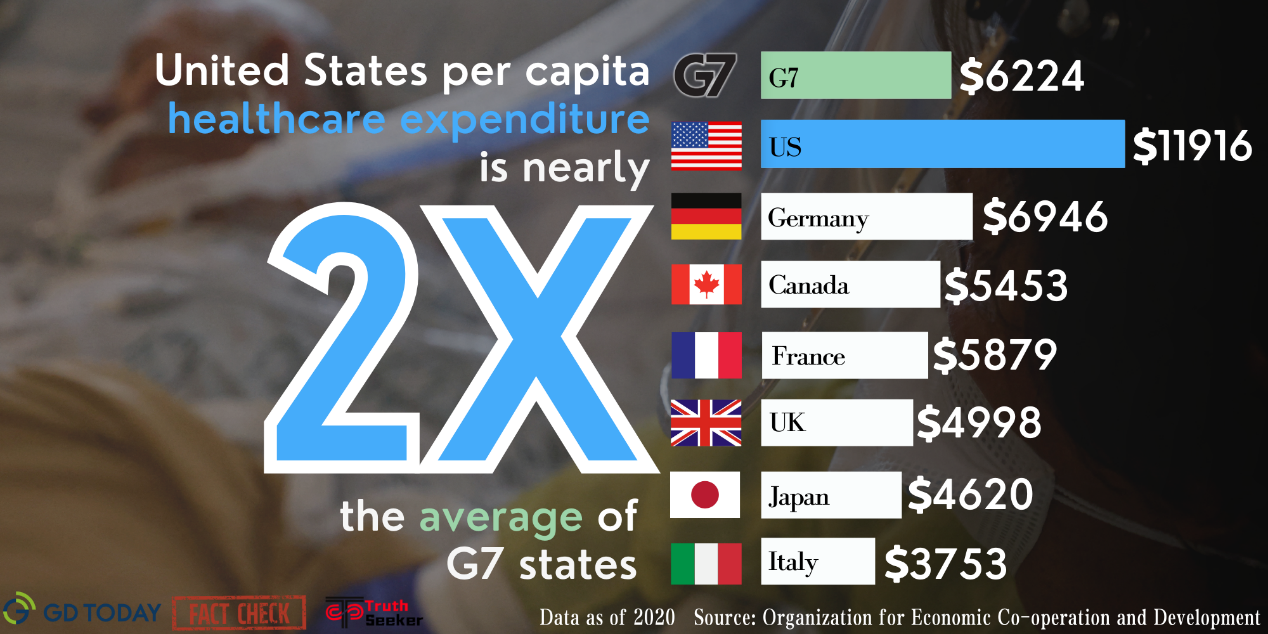
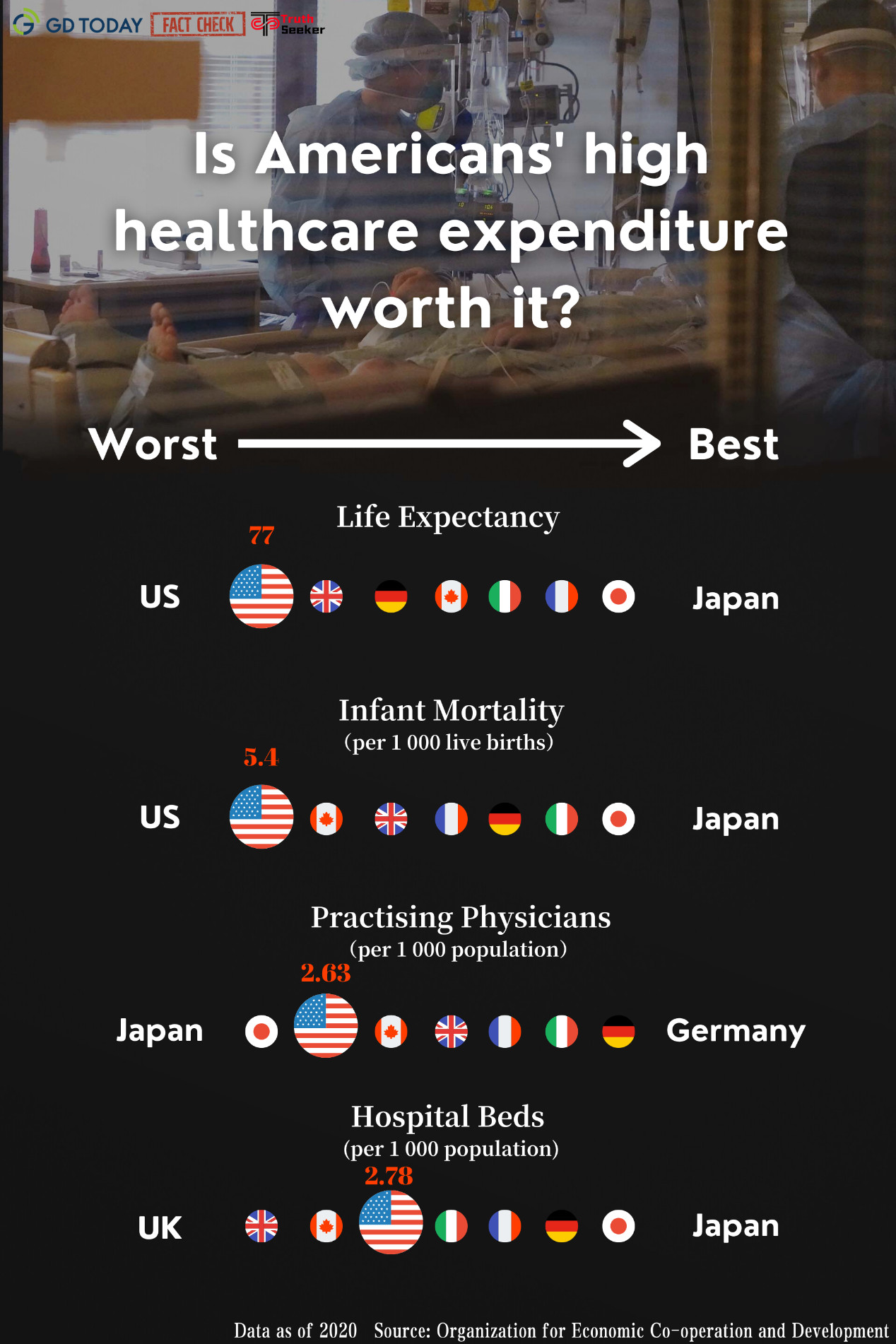
A CNN report on January 31, 2023 pointed out that the US spends more on health care than any other high-income country, but the health condition of theAmericans is the worst among all these countries.
Researchers analyzed the data of health systems from 38 member states of OECD and found that the US has the highest medical expenses among these countries. In 2021 alone, medical expenses in the US were nearly twice as high as the average level of other OECD countries, and even three to four times higher than South Korea, New Zealand, and Japan. Nevertheless, the data show that Americans still have the highest rates of multiple chronic diseases and obesity among OECD countries, and the death toll from the COVID-19 pandemicalso ranks first.
Over the years, the US has tried to build universal health care but has failed. Many experts and scholars have discussed this issue. Brian J. Miller, a non-resident fellow at the American Enterprise Institute, pointed out that: "Only if we reduce patients' medical costs without increasing government expenses, there will be better chances for people to access medical services."
In the opinion of Max Richtman, the chairman of the National Committee to Preserve Social Security and Medicare, with little bipartisan agreement on health care policies, Medicaid expansion still hangs in doubt.
As the US presidential election approaches, Americans are facing a worsening crisis: the affordability of health care. Top doctors say the US healthcare system is changing "beyond recognition," and Americans are still waiting for an affordable and efficient healthcare system.
Co-presented by GDToday and the School of Journalism and Communication, Jinan University
Author | Liying Huang, Yuedi Cao
Editor | Steven Yuen, Lydia Liu, James