














|
From February 17th to 22nd, Wang Yang, member of Political Bureau of the CPC Central Committee and secretary of Guangdong provincial Party committee, and Huang Huahua, vice secretary of Guangdong provincial Party committee, and Guangdong provincial governor, led a delegation to Shanghai, Jiangsu and Zhejiang on a five-day investigation tour. The delegates learned from the experience of the named provinces and were determined to further emancipate the minds to device new strategies for Guangdong's scientific development.
The tour to Shanghai: discovering the gap between Guangdong and Shanghai
On their arrival in Shanghai, the delegates were accompanied by Yu Zhengsheng, member of Political Bureau of the CPC Central Committee, and secretary of Shanghai Municipal Party committee, and Han Zheng, vice secretary of Shanghai Municipal Party committee and Mayor of Shanghai, to visit the exhibition hall of Shanghai鈥檚 city planning, and to study the history of Shanghai's reform and opening up.
Pudong has achieved glorious success in its 18 years of development and is the window of Shanghai鈥檚 modernization. The delegates were attracted by the various trial reform projects. Inquiring about these projects, delegate were able to learn Pudong鈥檚 experience in various aspects: emancipation of minds, innovation concepts, administrative reform, transformation of economy modes, narrowing the gap between the urban and rural areas, etc.
Emancipation of minds means to breakthrough the traditional thoughts. Shanghai鈥檚 methods of building High-tech Parks impressed the Cantonese deeply. Zhangjiang High-tech Park鈥檚 enterprising environment has attracted nearly 5,000 high-tech companies and formed industrial cluster in IC, software, bio-medicine, and other sectors. The park has become an important base for Shanghai to improve its independent innovation ability.
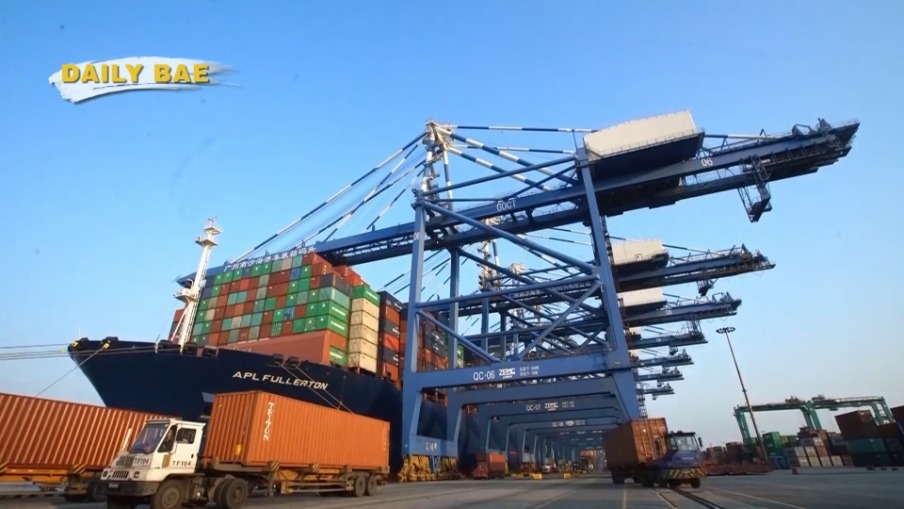
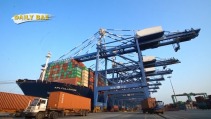
In order to develop more quickly, Shanghai also learns to break the administrative conventions and take the advantage of market mechanism. This experience also left deep impression on the delegates. Yangshan deep water harbor, situated on the Qiqu islands of Chengshi County in Zhejiang province, connecting the islands with the mainland with Donghai Bridge, after the construction of more than 50 large container terminals, will become one of the world鈥檚 largest large container port.
Jiangsu: Yangtze River Delta and Pear River Delta join hand in hand as engines for China's economy.
From February 18th to 19th, Wang Yang, member of Political Bureau of the CPC Central Committee, and secretary of Guangdong provincial Party committee, and Huang Huahua, vice secretary of Guangdong provincial Party committee, and Guangdong provincial governor, led party and administration delegates to Jiangsu on a investigation tour.
In recent years, Jiangsu has explored in how to emancipate the minds and how to implement the concept of scientific development. The province has achieved great success in regional coordinated development, deepening reform, absorbing foreign investment and other areas. Its GDP per capita has reached 4,428 US dollars, 10% more than that of Guangdong. The ratio between the incomes of urban and rural residents is 2.49:1, much lower than Guangdong鈥檚 3.15:1. Total use of foreign capital has reached 80.4 billion US dollars, 10 billion more than that of Guangdong. Jiangsu鈥檚 gross enrolment rate of higher education is 37%, 11.4% higher than that of Guangdong. The number of college students in Jiangsu ranks the first place across the country.
The delegates were shocked when they visited Kunshan city of Suzhou. As a county-level city, Kunshan has formed delegates to investigate in Dongguan, Shunde, Nanhai, all of which are cities in Guangdong, and studied from their experience. Facing the achievement this once 鈥渟tudent鈥 has made, the delegates were amazed: it has built up full better-off society, and become the most powerful county in China. Its laptop computer output took up 40% of the world鈥檚 laptop production last year, and it ranked the first place among all the counties in terms of comprehensive strength, innovation ability and economy level.
Emancipation of minds needs a world vision. Suzhou Industrial Park, a joint project between China and Singapore, has learned from the experience of Singapore. It created more than 80 advanced systems in city planning, construction and management, economic development, and public administrative management, which deeply impressed the delegates.
Zhejiang: Guangdong should learn from its entrepreneur spirit for all
From February 18th to 19th, Wang Yang, member of Political Bureau of the CPC Central Committee, and secretary of Guangdong provincial Party committee, and Huang Huahua, vice secretary of Guangdong provincial Party committee, and Guangdong provincial governor, led party and administration delegates to Zhejiang on a investigation tour.
In recent years, In recent years, Jiangsu has explored in how to emancipate the minds and how to implement the concept of scientific development. Its GDP per capita has reached 4,883 US dollar, with Per-capita disposable income of urban residents up to 20,574 RMB, compared with 8,265RMB of rural residents. All three figures are 30%, 16%, and 47% higher than those of Guangdong respectively. Contribution from private business to economic growth takes up 70% of the province鈥檚 GDP. Zhejiang is the first province across China to implement free compulsory education, with gross secondary education enrollment rate up to 91%, and that of higher education 38%. Both figures are 25.6% and 12.4% higher that those of Guangdong. Its social advancement level ranks the first place across the country.
The well-known e-business company Alibaba impressed the Cantonese delegates with their innovations. The company provides services for more than 19 million enterprises and businessmen from 220 countries and regions. It focuses on offering information services for medium-size and small enterprises, providing more than 1 million pieces of supply and demand information, earning 1 million RMB each day. The delegates could not help asking why Guangdong could not yield an innovative e-business company like Alibaba.
Wang Yang said, the competition between regions is a culture competition in the long run. The competency in cultural competition is what Guangdong lacks of. Zhejiang has more than 4 million businessmen investing and building businesses across the country, and still 1 million running business all over the world. Overseas Chinese from Caozhou and Shantou of Guangdong were many in the past, but fewer people chose to go overseas after the reform and opening-up. The entrepreneur spirit of Zhejiang people is inspiring to Guangdong.
The delegation includes more than 70 members: provincial senior officials such as Liu Yupu, Huang Yunlong, Xiang Zhiheng, Deng Weilong, Che Yongzhi, Chen Xiaochuan, Tong Xing, Wang Qingliang, Yao Zhibing; Xu Zongheng from Shenzhen, and other responsible cadres from various levels of party and administrative bodies. The delegation is the biggest of its kind in recent years.
Editor: Yan
|