







An Iranian woman walks past a mural of an Iranian flag in Tehran on February 22, 2026.
After a flurry of domestic protests since the end of 2025, along with relentless threats from external forces, especially the United States, Iran is currently weathering a difficult period. It seeks a third round of Iran-US negotiations in Geneva on February 26 to address Donald Trump's targeted strike.
In an exclusive interview with South recently, Seyed Emamian, co-founder of a Governance and Policy Think Tank based in Tehran, detailed the situation in the Middle Eastern country, the reasons behind the Iranian protests, and the imperatives that the government must adopt to roll with the punches.
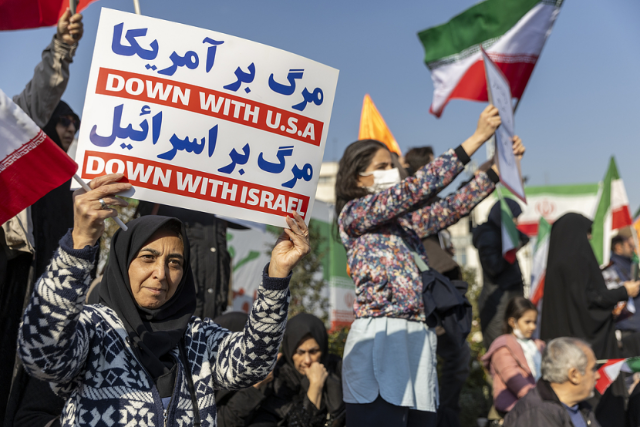
People hold placards and wave flags during a pro-government demonstration in Tehran on Jan 12, 2026.
Domestic protests evolve into a terrorist attack with external forces' intervention
From the Iranian presidential election protests in 2009, sociocultural challenges in 2022, and economic administration this year, Emamian noted that there are distinctive drivers behind social unrest in his country.
A peaceful demonstration is part of the modern lifestyle of societies, as Emamian expressed.
"We shouldn't limit peaceful demonstrations for any different reason, as it is a right recognized constitutionally for all Iranians," he added.
In reaction to the devaluation of the Iranian currency, protests that began at the end of 2025 started with legitimate demands for better and more competent economic administration.
These were peaceful protests recognized and respected by the Iranian government, which even embarked on reshuffling its economic team by replacing the head of the Central Bank of Iran.
However, on the evening of January 8, the protests turned into a violent and aggressive terrorist attack. Well-organized and trained Mossad agents, who had been active during the twelve-day war last June, attacked some Iranian military bases on behalf of Israel.
"They started to carry out an ISIS-style terrorist attack," Emamian noted.
They beheaded Iranians, not only security staff but also nurses, firefighters, and ordinary citizens. They attacked private cars, public buses, fire trucks, and ambulances.
Emamian described the level of brutality displayed that evening as "very shocking and surprising for everyone." Even security forces were unprepared for such a level of brutality and aggression.
"That night has been referred to by some analysts inside Iran as the 9/11 of the Iranian security establishment," he noted.

A view from a market as people shop amid soaring prices in Tehran on Jan 7, 2026.
A sluggish economy due to foreign countries' sanctions
The economic situation in Iran has roots that contribute to the protests, as Emamian analyzed.
With a population of over 80 million, Iran has a substantial domestic market, ranking second worldwide for natural gas reserves and fourth for proven crude oil reserves.
Nonetheless, the Iranian economy has undergone stagnant and noninclusive growth for several decades. According to data from the World Bank, Iranian GDP growth slowed to 3.7 percent in 2024/25, the lowest in five years, driven by a plunge in the oil sector.
Even worse, sanctions and maximum pressure policies imposed by the Trump-led US and the European Union have compounded the challenges facing the country's economy.
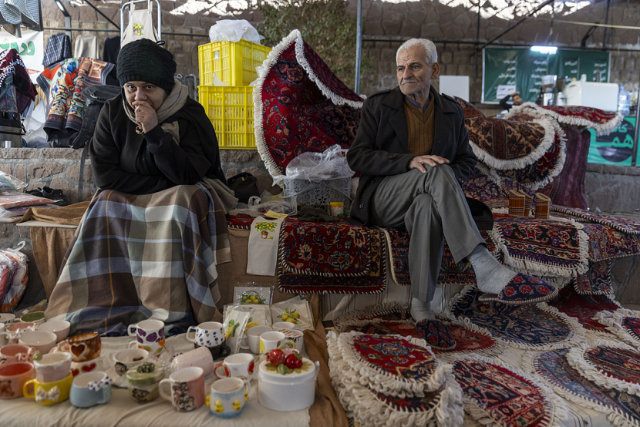
Vendors are seen at a weekly Friday market in Tehran on Jan 16, 2026.
Two imperatives that the Iranian government must take
Against all these challenges, Emamian proposed two imperatives for the Iranian government to ride out the storm.
The first imperative concerns economic administration.
"A more competent economic administration is something that is very much expected from the country," Emamian pointed out. The Iranian economy has been affected by sanctions and the maximum pressure policy of President Trump for the second round.
The government should be well-prepared to mitigate the consequences of such maximum pressure policies to keep the economy alive and prosperous as much as possible.
The second imperative involves embracing multilateralism.
Emamian suggested that Iran should enhance bilateral and multilateral relationships with emerging economies like China, Russia, and India, as well as with multilateral platforms such as BRICS+ and the Shanghai Cooperation Organization.
"We need to find alternative ways, such as bilateral or multilateral cooperation frameworks, that could help us counter the consequences of Trump's unilateralism on the global economy," he added.
Reporter | Zhang Ruijun
Photo | CFP