








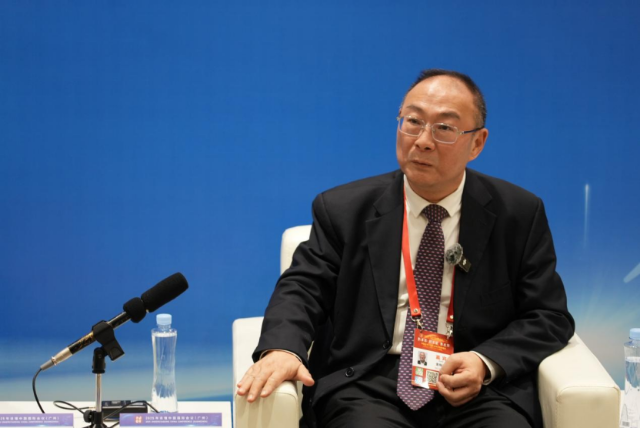
Jin Canrong receives the interview at the 2025 Understanding China Conference in Guangzhou on Dec. 1, 2025.
China's permanent representative to the United Nations, Fu Cong, sent another letter to UN Secretary-General Antonio Guterres on December 1, firmly refuting what he described as unreasonable arguments made by Japan's permanent representative to the UN, and elaborating on the position of the Chinese government.
In late November, Fu sent a letter to the UN Secretary-General, elaborating on the position of the Chinese government regarding the erroneous remarks on China made by Japanese Prime Minister Sanae Takaichi.
In an interview with South at the Understanding China Conference 2025 held in Guangzhou, Jin Canrong, professor at Renmin University of China's School of International Studies, noted that Japanese PM Sanae Takaichi's erroneous remarks on Taiwan reflect two dangers: a return to Japan's militarism and a violation of the international order established after World War II.
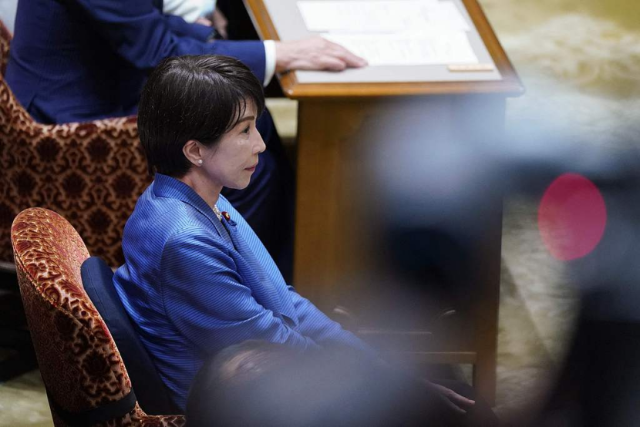
Japan's PM Sanae Takaichi attends a debate with opposition party leaders in the National Diet in Tokyo on Nov. 26, 2025. (Photo: CFP)
Japanese PM's erroneous remarks on Taiwan violate the order of WWII
Sanae Takaichi's rise to power was largely due to Abe Shinzo's support. Abe had previously voiced that a Taiwan contingency is a Japan contingency, as Jin analyzed.
However, Takaichi escalated her rhetoric, suggesting that if Japan were to be affected, it could be a matter of survival. Therefore, Japan should exercise its right to self-defense against China—an implied military threat against China.
"This was something no previous Japanese leader had ever said," Jin noted. "Japan wants to fight against China. A defeated nation wants to fight a victorious nation. This violates the order of World War II," he underscored.
Notably, Jin detailed the stances of the five permanent members of the UN Security Council on Takaichi's erroneous remarks on Taiwan.
According to the Wall Street Journal, US President Donald Trump advised Takaichi not to provoke Beijing over the Taiwan question. Russia has firmly criticized Japan's stance, calling it a challenge to the post-World War II international order.
France, in effect, has indirectly criticized Japan. The UK has remained silent so far. "The silence is also a form of non-support," Jin added.
As for China, Jin clarified that this tension in Sino-Japanese relations was caused by Japan, and China was forced to retaliate. China's diplomatic, economic, and military countermeasures, in his view, are currently relatively reserved.
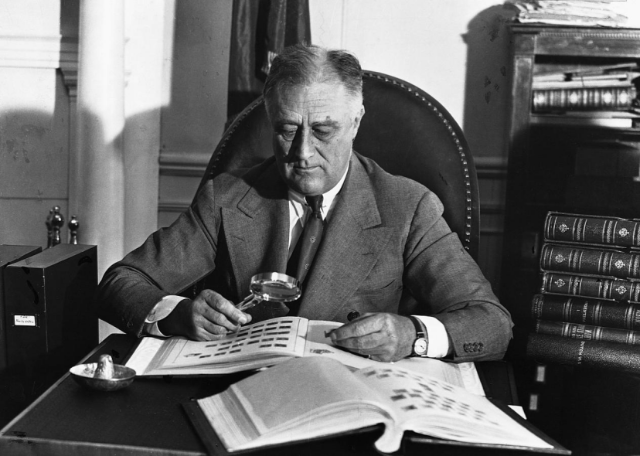
Franklin D. Roosevelt looks at his stamp collection to distract his attention from the immense pressure that has just erupted as a result of the attack on Pearl Harbor. (Photo: CFP)
Highest laud for China's contribution to WWII comes from former US president
As this year marks the 80th anniversary of the victory in the Chinese People's War of Resistance Against Japanese Aggression and the World Anti-Fascist War, Jin claimed that undoubtedly, China made a major contribution during World War II.
In his eyes, the best account to date comes from then-US President Franklin Roosevelt. He presents a passage arguing for China's pivotal role from a reverse perspective.
According to Jin, Roosevelt said on different occasions that if China had surrendered to Japan at that time, history would have been rewritten, and Joseph Stalin, Winston Churchill, and he would never have had the opportunity to sit together.
"China persevered in the War of Resistance against Japan under exceptionally difficult conditions," Jin lamented.
"If China had surrendered, the entire history of humankind would indeed have been rewritten," Jin underlined.
Reporter: Zhang Ruijun
Photo: Qin Shaolong
Editor: Yuan Zixiang, Ou Yangyan, James Campion, Shen He