











During the 14th Five-Year Plan period (2021–2025), Guangdong Province planted over 4,900 hectares of new mangroves and restored more than 2,600 hectares, exceeding both the overall restoration target for the period and the 2025 annual baseline goal of 1,500 hectares. The newly planted mangrove area ranks first nationwide.
This information was released at a press conference held in Guangzhou on January 20, as part of a series reviewing Guangdong's development under the 14th Five-Year Plan.
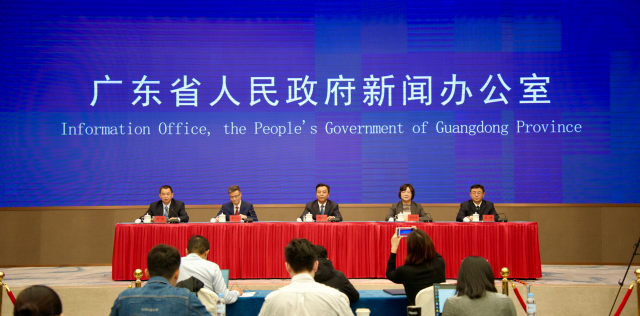
Photo: Southcn.com
As a major maritime province in China, Guangdong boasts a mainland coastline of 4,084 kilometers—the longest in China—and oversees 64,700 square kilometers of coastal waters. Its marine economy has led the country for 30 consecutive years.
In ecological protection, Guangdong has rehabilitated more than 200 kilometers of coastline, constructed around 30 kilometers of ecological seawalls, and restored over 7,600 hectares of coastal wetlands since 2021.
The average proportion of good-quality water in the province's nearshore areas increased by 9 percentage points during the past five years compared to the 13th Five-Year Plan period (2016-2020), reaching 91.2% in 2025, which is 5.2 percentage points above the planned target.
Guangdong has also been actively exploring ways to realize the value of marine ecological products. In 2025, Zhuhai's Jinwan District completed China's first cross-border marine carbon credit transaction, integrating local tamarisk carbon credits with those from Portuguese-speaking countries.
In this transaction, the 569 tons of carbon credits generated over a 20-year period from approximately 4.55 hectares of tamarisk scientifically planted through cutting propagation in Zhuhai were bundled with internationally certified carbon credits from Portuguese-speaking countries into an asset package, which was then successfully listed and traded.
In developing marine ranching, Guangdong has deployed 8,000 gravity-based deep-sea cages and guided the establishment of 17 primary development entities focused on modern marine pasture construction.
For fishery resource conservation, the province has organized the release of approximately 1.3 billion units of aquatic economic species, as well as rare or endangered species such as sea turtles, Chinese horseshoe crabs, and yellow-lipped fish into relevant waters. These efforts have effectively restored aquatic populations and improved local water quality and ecosystems.
Additionally, Guangdong has established 13 traditional artificial reef-based marine ranching zones, covering a total sea area of over 1,000 square kilometers. With more than 17,000 reef structures deployed, the province ranks among the top in China in the number of conservation-oriented marine ranches.
Reporter | Chen Jinxia
Editor | Hu Nan, James Campion, Shen He