








Recently, Huangjing Marine Biotechnology Co., Ltd., a Huizhou-based technology enterprise, achieved a major milestone in conservation efforts: the first generation of Chinese bahaba has successfully spawned for the second time at its breeding facility, marking significant progress in the artificial breeding of this critically endangered species.
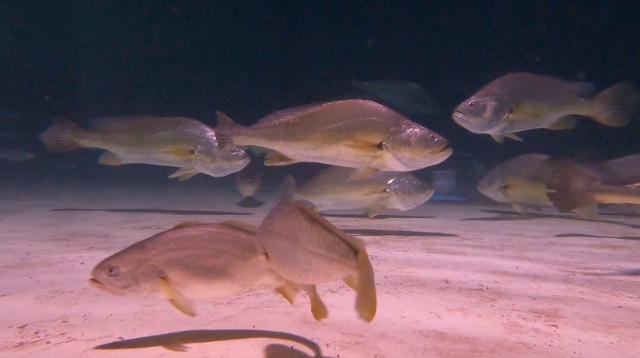
Chinese bahaba. (Photo by correspondent)
Back in December of last year, the research team successfully bred approximately 220,000 second-generation Chinese bahaba using the first generation of sexually mature, artificially bred fish. This achievement represented a complete breakthrough in the full artificial breeding cycle of the species.
The Chinese bahaba is a rare fish species native to China. It belongs to the stonehead fish family and was once heavily overfished for its swim bladder, valued in traditional medicine, and its otoliths, which have scientific significance. Combined with habitat degradation, overexploitation led to a dramatic population decline. In 2006, the Chinese bahaba was classified as "Endangered" on the IUCN Red List, and in 2021, it was elevated to a National First-Class Protected Wildlife species in China.

Yan Kuoqiu.
Yan Kuoqiu, a senior engineer with professor-level credentials at the company, has been involved in research on the Chinese bahaba since 1996. While compiling China's first World Marine Farmed Fish Atlas, he spent years searching before finally photographing a live Chinese bahaba—an encounter that sparked his lifelong commitment to studying the species. However, the lack of live specimens at the time forced him to pause his research.
A turning point came in 2019. While purchasing fish fry from local fishermen, Yan stumbled upon some specimens suspected to be Chinese bahaba. After thorough comparison and verification, the fry were confirmed to be authentic. From then on, he led a dedicated team in launching systematic breeding studies.
Today, the company's breeding base is home to an expanding population of Chinese bahaba, with fish at various life stages managed in specialized tanks. Meanwhile, the research team has grown to include experts from ten institutions, such as the Chinese Academy of Fishery Sciences, the Chinese Academy of Sciences, and Xiamen University. Together, they are studying the species' genetic background, factors contributing to its endangered status, and advanced monitoring and conservation technologies to develop a comprehensive protection plan.
Reporter: Zhang Guowei, Wu Tianyu
Photo: Wang Changhui
Editor: Wei Shen, James, Shen He