











A Chinese medical assistance team in Ghana has conducted the first minimally invasive laparoscopic procedure to remove common bile duct stones at a public hospital in the country recently, marking a milestone for local surgical care.
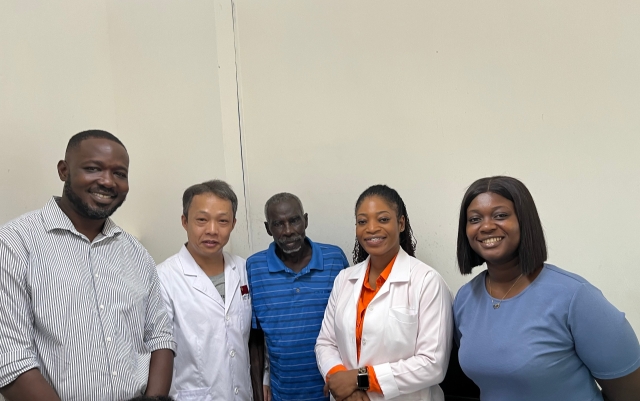
The patient, 85-year-old Samuel Debrah, returned this week for a check-up after undergoing the pioneering operation two weeks earlier. Doctors reported that his recovery is progressing well: his bilirubin level has fallen to the normal range, he is eating and walking comfortably, and has even gained weight.
His daughter said the turnaround surprised their neighbors. "Last week he was jaundiced and could barely swallow water. The next day after coming home, he was walking around the yard," she said.
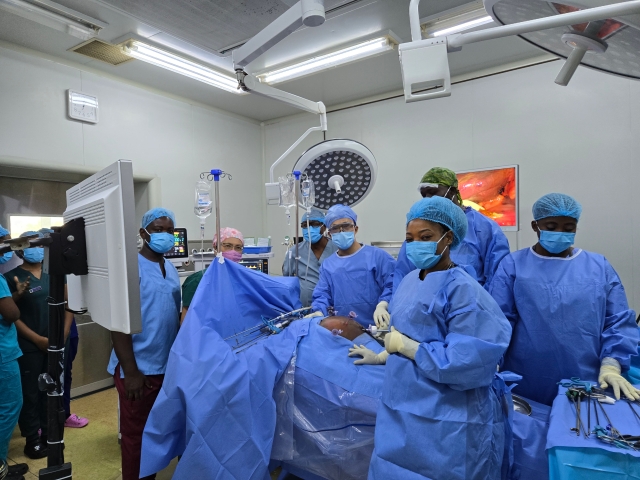
The surgery left only four tiny incisions, each under one centimeter. According to team leader Yang Yongguang, Debrah was able to take liquids the day after the procedure and was discharged on the third day. Due to Ghana's hot climate and the risks associated with recovery, the team used WhatsApp and phone calls to follow up on his home care. His latest review showed all indicators improving, and the tube used during recovery was ready to be removed.
Yang said the breakthrough reflects years of cooperation. "From our first laparoscopic hernia repair to this bile duct exploration, it is a good start for minimally invasive surgery in Ghana," he noted.
A China-Ghana laparoscopic training center has recently been established, with its first training program scheduled to begin next month. The initiative aims to localize advanced surgical skills and expand access to minimally invasive procedures, underscoring China's long-term medical support and its role in strengthening healthcare ties between the two countries.
Reporter | Dai Bosi
Photo | Chinese medical team assisting Ghana
Editor | Hu Nan, James Campion, Shen He