











The fourth "Yunshan Cup" International Remote Interpreting Contest concluded on December 20 at Guangdong University of Foreign Studies (GDUFS), bringing together interpreters from around the world to translate local stories from Guangdong for international audiences.
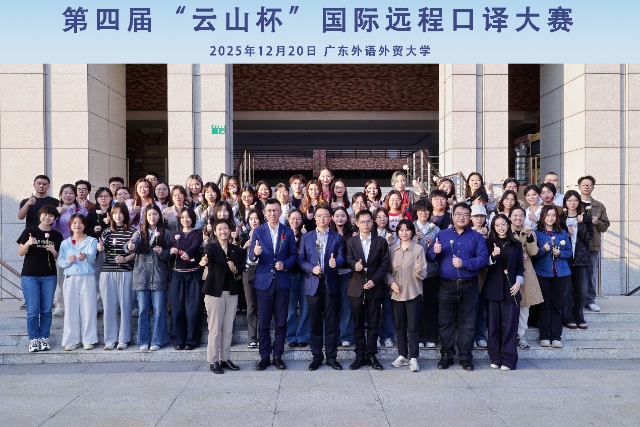
Group photo at the finals
More than 4,500 interpreters from China and overseas signed up for this year's competition. After multiple rounds, 251 contestants reached the finals, competing in 16 languages including English, French, Spanish, Russian, Japanese, and Portuguese. The finals were livestreamed and watched by tens of thousands of viewers online.
The competition focused on translating local stories from Guangdong for international audiences. The source materials were based on actual locations and cases from different cities, covering topics such as cultural heritage, environmental protection, industry, technological innovation, and everyday local life.
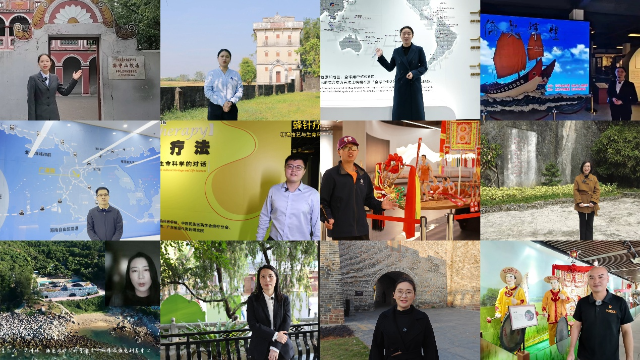
Contestants introduce Guangdong
Liu Jianda, Vice President of GDUFS, said the competition's remote format allowed young interpreters from 16 language backgrounds to compete on the same platform, making it an effective way to present China's stories to the world.
Guest speeches at the finals also sparked discussions about the future of the profession as artificial intelligence reshapes the language industry. Xing Yutang, Vice President of the Academy of Translation and Interpretation of China International Communications Group, stated that while AI tools are advancing rapidly, high-end interpreters remain irreplaceable, with their value more pronounced and demand more urgent than ever.
This view was echoed by Professor Wallace Chen Ruiqing of the Middlebury Institute of International Studies at Monterey, who argued that technology should support human interpreters, not replace them.
Sylvia Kadenyi Amisi, President of the International Association of Conference Interpreters, added that interpreters are not just language professionals but also cultural communicators, stressing that judgment, empathy, and cultural understanding remain essential to the profession, even as technology evolves.
Reporter | Chen Siyuan
Photo | Guangdong University of Foreign Studies (GDUFS)
Editor | Hu Nan, James Campion, Shen He