











The Guangdong Museum is bringing cultural treasures to life in a truly inclusive way. On January 24, the museum hosted special guided tours for visitors with visual and hearing impairments at its exhibition Splendors of the al-Sabah Collection from Kuwait, offering a multisensory experience that combines touch, audio description, and sign-language interpretation.
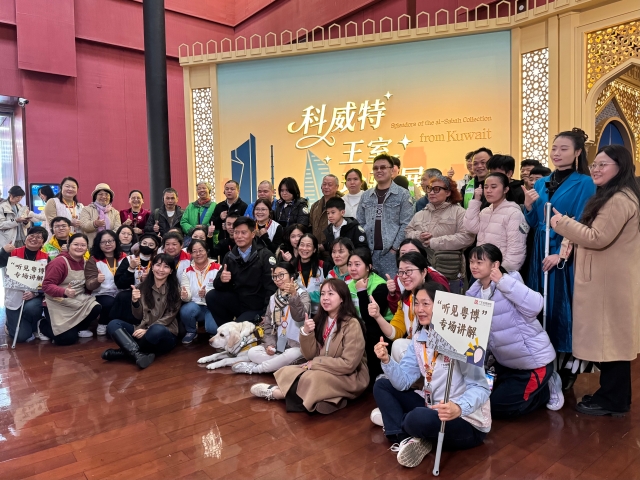
The tours were specifically designed to allow visually and hearing-impaired visitors to experience the rich history and artistry of Kuwait's Silk Road heritage. Two parallel sessions took place in the exhibition hall: one for visually impaired visitors using tactile models and detailed verbal descriptions, and another for hearing-impaired visitors guided entirely through expressive sign language.
Experiencing history through touch and sound
Visitors with visual impairments explored replicas of key artifacts with their hands while listening to trained volunteers describe every detail. Relief discs depicting hunting scenes, standing figures, smooth rabbit-headed vessels, and intricately carved palace panels were transformed into tangible stories. This hands-on approach allowed participants to feel the craftsmanship, understand the forms, and connect with objects that are usually experienced only visually.

Award-winning volunteer guide Chen Jing led participants through four thematic chapters—Bronze and Stone, Imperial Splendor, Greek Influence, and Persian Brilliance—bringing Kuwait's cross-cultural history to life. Each artifact became a bridge across time, connecting visitors to the civilizations that once converged in the Gulf region.

To add an emotional layer to the experience, the museum also included a live music performance. Violinist Wu Lishan, formerly with China's National Opera and Dance Drama Theater, and visually impaired singer Jiang Xiaoyin, a 2024 national music award winner, performed in the gallery, enhancing the atmosphere and creating a multisensory journey that engaged both heart and mind.


Sign language unlocks history
For hearing-impaired visitors, volunteer guide Li Wenting worked alongside professional sign-language interpreter Lu Chunling. Through fluent and expressive signing, visitors learned about Kuwait's role as a cultural crossroads, the craftsmanship of gold, silver, and stone artifacts, and the stories of past dynasties. From ancient Mesopotamian rituals to Sassanian royal ceremonies, history was made accessible in a vivid and personal way.
A city commitment to inclusive culture
These special tours are part of Guangdong Museum's long-standing accessibility programs: Hear the Museum for visually impaired visitors and Sign with the Museum for hearing-impaired visitors. Both programs have been offered regularly since 2018 and are supported by professionally trained volunteers and sign-language specialists, ensuring consistent, high-quality service.
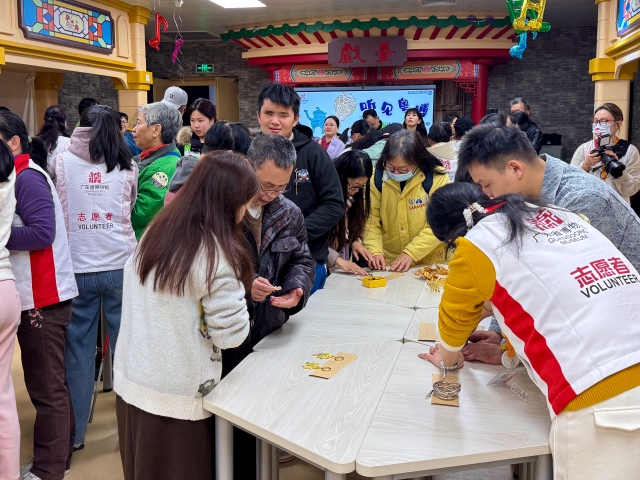
The museum's inclusive efforts have been recognized nationally and internationally. The programs were included as innovative practice cases by UNESCO and named among China's 2024 National "Four 100" Outstanding Volunteer Service Programs. By offering these thoughtfully designed experiences, the Guangdong Museum is not only making world-class cultural heritage accessible to all but also demonstrating a city-wide commitment to care, empathy, and cultural equity. Through touch, sound, and sign language, every visitor is invited to connect, feel, and participate.
Reporter: Li Fangwang
Photo: Li Fangwang
Editor: Hu Nan, James Campion, Shen He