











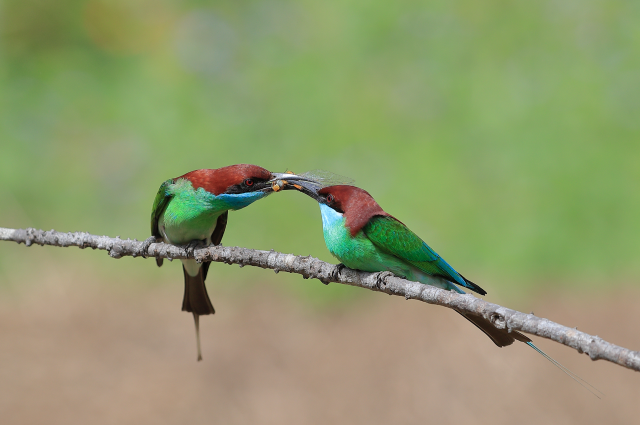
Blue-throated bee-eaters feed each other in mid-air, showing their affection. (Photo: Cheng Li)
Cheng Li, a bird lover in Zhanjiang, used a short video to showcase the highlights of rare bird species visiting the city in 2025. Many of the rare birds in the video are nationally first-class protected animals in China. Their arrival serves as a significant indicator of the ecological quality of this land.

Horseshoe crabs move around on the beach. (Photo: He Ling)
Known as an ecological treasure trove at the southernmost tip of the Chinese mainland, Zhanjiang boasts a marine area of 15,000 square kilometers. Thanks to consistent efforts in ecological restoration and systematic conservation over recent years, blue-throated bee-eaters, hailed as "China's most beautiful little birds," have nested and bred here. Forest-dwelling mammals such as leopard cats and small Indian civets have also been frequently sighted. Statistics show that the number of waterbirds overwintering in places like Nanping Island has hit new highs.

The notochords inside lancelets are clearly visible. (Photo: He Ling)
As for the ocean, Leizhou Bay in Zhanjiang is home to the world's second-largest population of Chinese white dolphins. In these protected waters, rare species including Bryde's whales and green sea turtles also enjoy a peaceful habitat. Meanwhile, ancient "living fossils" that are extremely sensitive to water quality—such as amphioxus and Chinese horseshoe crabs—have found a clean and safe living environment here.
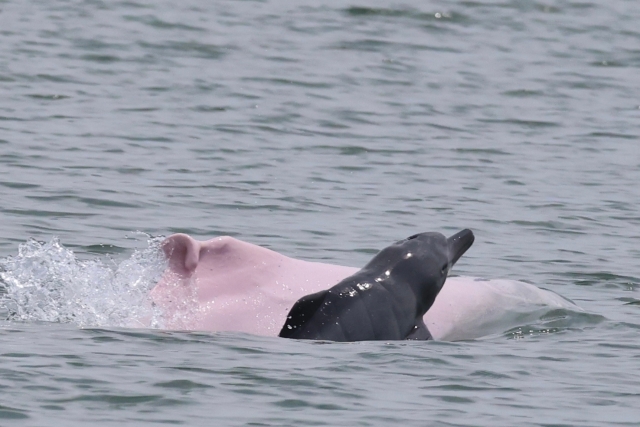
Newborn dolphins (Photo: Lin Wenzhi)
Nowadays, Zhanjiang provides a comfortable home for the biodiversity of these "magical creatures," demonstrating practical efforts to achieve harmonious coexistence between humans and nature.
Author | Deng Anqi
Editor | Wei Shen, James Campion, Shen He