











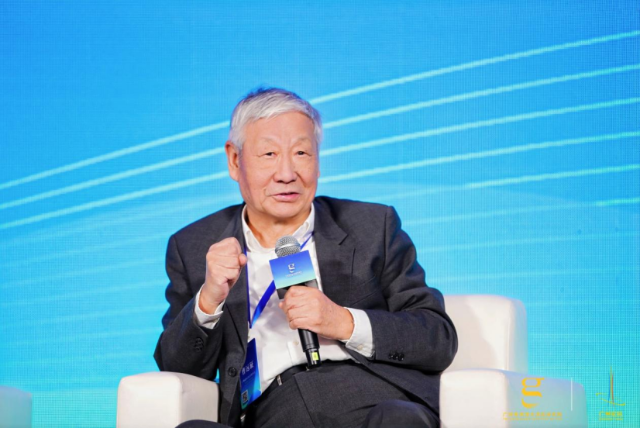
Cao Yuanzheng attends the 2025 Guangzhou Forum in Guangzhou on Dec. 27, 2025. (Photo: Guangzhou Institute of the Greater Bay Area)
"Globalization is ushering in a new 2.0 version," noted Cao Yuanzheng, former chief economist of the Bank of China.
The claim was made during an exclusive interview with South at the 2025 Guangzhou Forum. Cao detailed the ongoing shift from hyper-globalization to regional arrangements in 2026, China's role in this evolution, and the US-China collaboration to meet the needs of the global economy this year.
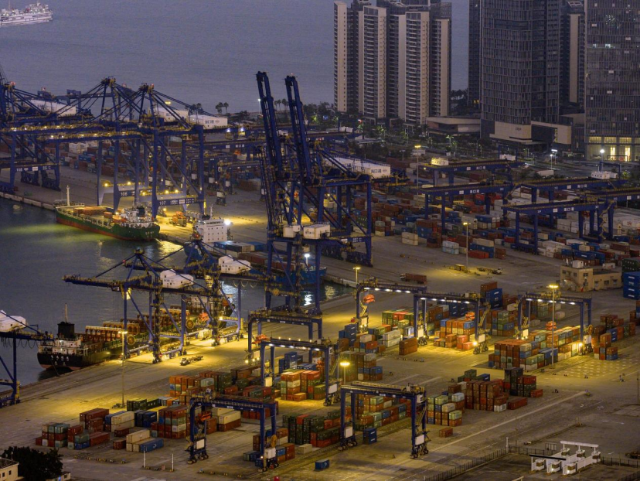
Hainan Free Trade Port embraces the rising sun of New Year's Day 2026 on January 1, 2026.
Globalization 2.0 shifts from hyper-globalization to regional arrangements
"We are entering Globalization 2.0. It requires rebalancing and restructuring into a regional arrangement," underlined Cao.
He explained that economic globalization is a result of economies of scale that benefit the entire world and accelerate global competition. As economies develop, countries inevitably transcend national borders, leading to rapid trade growth. Trade and specialization bring benefits.
According to Cao, the US is beginning to align with regional arrangements, as seen in its 2025 National Security Strategy report, which considers South America as part of the region. The European Union is inherently regional, and ASEAN is also included.
"This is a process of reshaping Globalization 2.0. But the core of 2.0 lies in the integrated arrangement of industrial and supply chains," Cao added.
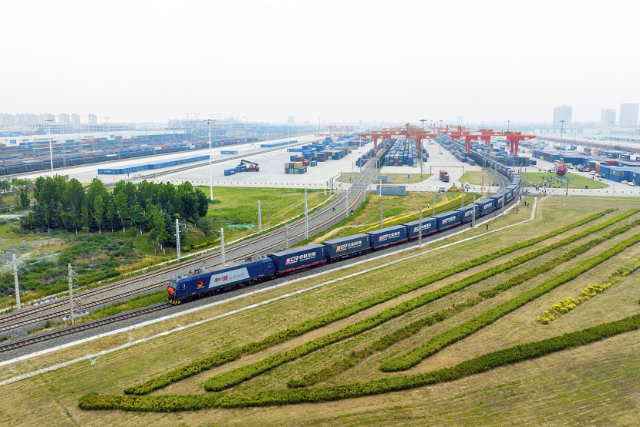
X8157 China-Europe freight train departs from Xi'an International Port Station on May 25, 2024.
China's Belt and Road Initiative epitomizes globalization 2.0
Speaking of globalization 2.0, Cao highlighted China's Belt and Road Initiative (BRI) as it becomes a new symbol of globalization.
China's trade with BRI countries has grown robustly, with a double-digit rate annually, accounting for more than half of China's total foreign trade. From January to November last year, China's exports to BRI countries increased by 11.6% year-on-year.
China's trade surplus with BRI countries has surged to 45% of its total trade surplus, roughly $480 billion, surpassing the US (24%) for the first time, signaling an accelerating shift in global supply chains.
Additionally, trade in intermediate goods among BRI countries has grown by roughly 20% annually. Chinese enterprises are investing overseas in sectors such as clean energy, like photovoltaics, representing a global reshaping.
Notably, Cao pointed out that Guangzhou has become a hub for trade in intermediate goods, with most intermediate trade with ASEAN countries passing through here. Guangzhou's intermediate trade products, such as auto parts, are growing rapidly.

Made-in-China decorations are offered for sale at a big box retailer in Chicago, Illinois, on May 12, 2025.
China and the US should work in the same direction to meet the needs of the global economy
The relationship between the US and China is a mirror image, as Cao observed.
China's export surplus is almost equal to the US's import deficit. By 2025, China's export surplus is projected to be around $1.2 trillion, and the US import deficit will be roughly the same.
"This implies that both China and the US have global responsibilities. The core of the global economy last year has revealed the US's shrinking compared to China's expanding influence worldwide," Cao noted.
Three issues stood out in the US economy in 2025: a plunging US dollar, a jobless recovery, and a contraction due to Trump's tariffs globally.
The US dollar dropped by about 11% in the first half of 2025, experiencing its biggest loss since 1973. Despite a well-performing US stock market, hovering around 47,000 points, the real economy in the US has not improved, leading to a jobless recovery. As Donald Trump imposed tariffs worldwide, the US contracted, disrupting the entire global economic system.
In contrast, the resilience of the Chinese economy was demonstrated globally last year, as Cao highlighted.
The country's trade surplus for the year topped one trillion dollars for the first time. While China's exports to the US have waned, its exports to other countries are increasing.
"This signifies that China's industrial and supply chains serve the entire world," he commented.
Cao listed surging exported products in what he termed the “new trio” (electric vehicles, lithium-ion batteries, and photovoltaic products). Taking new energy vehicles as an example, the export volume of new energy vehicles reached 3 million units from January to November in 2025, marking a year-on-year rise of 62%.
"China and the US should work in the same direction. This is necessary for the global economy. The two countries should seek a way to coexist peacefully," he underscored.
Reporter: Zhang Ruijun
Photo: CFP
Editors: Yuan Zixiang, James Campion, Shen He