











Mayors of five key cities—Guangzhou, Shenzhen, Zhuhai, Dongguan, and Huizhou—presented their cities' development blueprints for the 15th Five-Year Plan on January 28 at a press conference during the 14th Guangdong Provincial People's Congress.
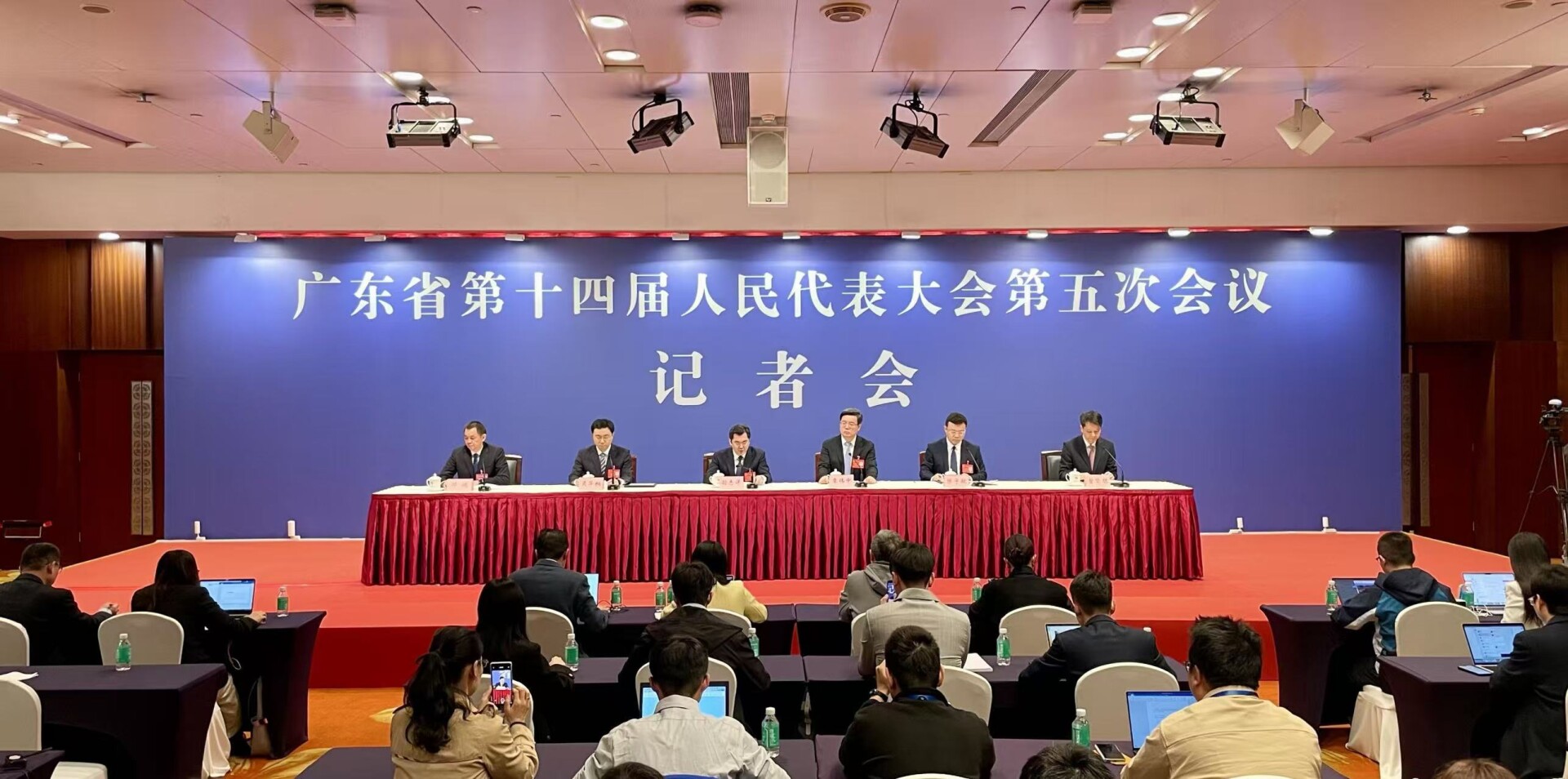
Against the backdrop of a landmark achievement—the Shenzhen-Hong Kong-Guangzhou Innovation Cluster being ranked first globally in the 2025 Global Innovation Index (GII)—the mayors presented a cohesive vision for regional development at the conference and outlined interconnected strategies, underscoring a collective drive to transform this top-tier recognition into broader, high-quality growth for the Guangdong-Hong Kong-Macao Greater Bay Area (GBA).
Guangzhou, the provincial capital, emphasized strengthening its role as an open gateway and comprehensive hub while prioritizing the cultivation of new productive forces. Mayor Sun Zhiyang highlighted the preparation and construction of a GBA international commercial bank, advancing the GBA market integration with the Nansha district as a pivotal point, and fostering future sectors like the low-altitude economy.
Directly connected to the top-ranked cluster, Shenzhen's plans focus on leveraging its core innovative strength. Mayor Qin Weizhong highlighted the city's leading R&D investment intensity in China and deepened collaboration with Hong Kong. The upcoming hosting of the 2026 APEC meetings is noted as a key moment to enhance the city's global profile.
Meanwhile, Zhuhai presented its strategy to capitalize on its unique geographical assets. As the only mainland city connected to both Hong Kong and Macao by land via the Hong Kong-Zhuhai-Macao Bridge, Mayor Wu Zetong detailed plans to expand its economic scale, powered by the Bridge, while supporting the Guangdong-Macao In-Depth Cooperation Zone in Hengqin to develop and nurture new future industries.
Dongguan, a traditional manufacturing powerhouse, is actively reshaping its model. Mayor Zeng Jianpeng introduced the city's vision of creation and quality products, aiming to upgrade its industries and invest in its people more for a livable city by absorbing innovation from neighboring hubs like Shenzhen and Guangzhou.
Rounding out the regional picture, Huizhou affirmed its role as a major growth engine for the province, determined to lead in AI and robotics. Mayor Chen Yuhang outlined plans to utilize its established "2+1" industrial system and large-scale industrial parks to inject sustained momentum into the broader regional economy.
Collectively, the presentations moved beyond individual city plans, revealing an integrated regional blueprint. From Guangzhou's openness and Shenzhen's innovation core to Zhuhai's connectivity and Dongguan's transformation, the strategies are designed to synergize, aiming to propel the entire GBA toward a more innovative and interconnected future, ensuring its global competitiveness is built on a foundation of collaborative strength.
Reporter | Guo Chuhua
Photo | Nanfang Plus