











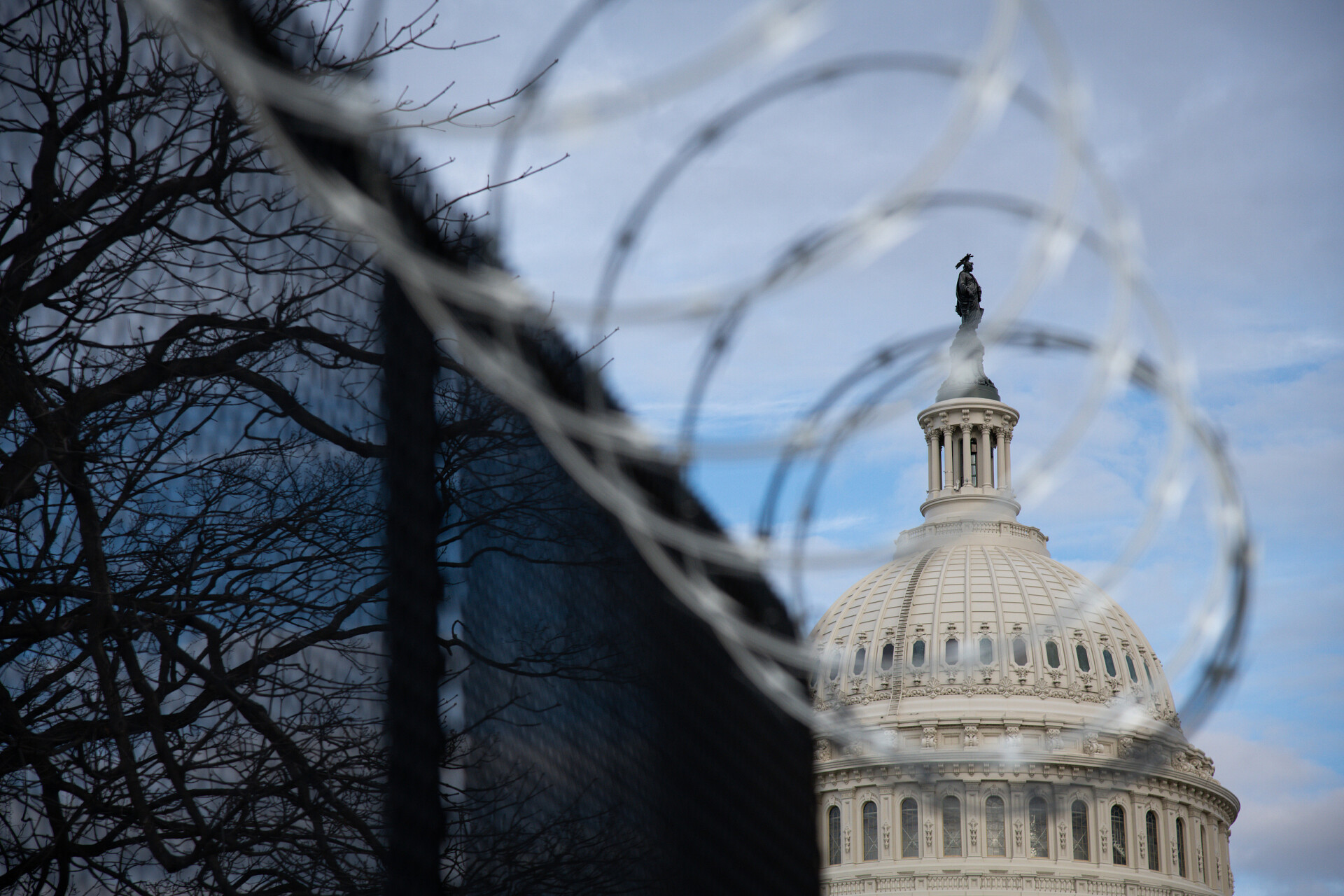
The United States Capitol building is seen in Washington, D.C. (Photo: CFP)
The longest federal government shutdown in U.S. history has ended after President Trump signed a bill passed by Congress on the night of November 12.
What began as a political standoff over healthcare funding escalated into a nationwide crisis, with deep economic and social consequences that will outlast the 43-day shutdown itself.
Political gridlock turns humanitarian
The shutdown stemmed from entrenched partisan divisions over a temporary funding bill for the 2026 fiscal year, centered on subsidies for the Affordable Care Act. The dispute quickly expanded into a prolonged power struggle between Democrats and Republicans, with neither side showing urgency to compromise.
The result: roughly 750,000 federal employees were forced into unpaid leave, and millions of Americans temporarily lost access to food assistance programs. Head Start preschool and childcare services were also suspended, prompting the National Head Start Association to warn of "devastating" impacts on vulnerable families.
Small businesses suffered as well, with 320 firms losing access to an estimated 170 million USD in Small Business Administration-backed loans each day, according to the agency's Administrator Kelly Loeffler.
Economic and infrastructural damage
The shutdown disrupted critical sectors, most visibly aviation. By 4:30 p.m. ET on November 9, over 2,200 flights had been canceled and 7,500 delayed nationwide, according to flight tracker data, as air traffic control staffing shortages mounted.
The Congressional Budget Office projected that U.S. GDP growth in Q4 could fall by one to two percentage points, depending on the duration of the shutdown. Moody's Analytics estimated losses of up to 30 billion USD per week.
Meanwhile, financial analysts at The Kobeissi Letter reported that the U.S. government accumulated over 600 billion USD in new debt during the first 30 days alone—more than 19 billion USD daily.
Jason Furman, former chair of the White House Council of Economic Advisers, noted that this federal government shutdown has severely undermined domestic and international confidence in the U.S. government and its systems.
Reporter | Liu Xiaodi, Wang Kai
Editor | Yuan Zixiang, James Campion, Shen He
Chen Manqi (intern) also contributed to the story.