











Donald Trump holds a press briefing on the US Supreme Court decision to block the use of an emergency law to unilaterally impose sweeping tariffs on most US trading partners in Washington, DC, on Feb. 20, 2026.
Ultimately, the Supreme Court of the United States (SCOTUS) gave a 6-3 ruling last week that the International Emergency Economic Powers Act of 1977 (IEEPA) does not grant the president the power to unilaterally impose untethered tariffs on a whim.
This ruling found the fentanyl and reciprocal tariffs imposed under IEEPA, as well as the 10% "minimum baseline tariff" imposed on all trading partners, to be illegal.
This judicial halt to IEEPA may signal the peak of Trump's domestic political influence, noted Xu Qiyuan, Senior Fellow and Deputy Director of the Institute of American Studies at the Chinese Academy of Social Sciences, in his analysis to South recently. He projected that Trump's governing logic is shifting from unrestricted executive dominance to a tough game under judicial and legislative constraints.
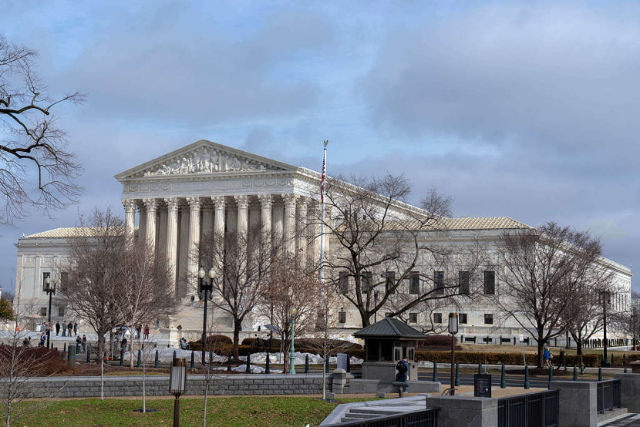
An outside view of the US Supreme Court on Friday, Feb. 20, 2026, in Washington
Game between executive and judicial branches led to weakened US bargaining power in trade negotiations
This SCOTUS ruling not only undermines the credibility of the White House's frequent tariff threats, but also shatters the stability of its policy commitments, as Xu observed.
In future foreign negotiations, even if the White House makes promises of tariff cuts, exemptions, or suspensions of additional tariffs, trading partners will increasingly recognize that these commitments may not be sustainable in the long term. They could be overturned under domestic judicial review or rewritten under pressure from congressional politics and elections.
Xu laid bare that US foreign negotiations are no longer solely driven by the president's will but are once again constrained by the separation of powers. Whether tariffs can be imposed, extended, and established as long-term arrangements will all be subject to re-examination by the domestic legal and political environment.

A damaged discarded globe is left on the pavement near the Port of Southampton on Feb. 25, 2026.
Overall pressure from tariffs has not been fundamentally alleviated despite the relief
Following the ruling, the EU, Canada, Brazil, and other countries welcomed the verdict.
German Chancellor Friedrich Merz noted that he expects the tariff burden on German firms to ease following the court decision.
Canada's Ontario Premier Doug Ford said optimism is growing, but uncertainty persists over Washington's next move.
The Trump administration then invoked Section 122, announcing a temporary increase in global import tariffs to 15%.
Future observations should focus on two main themes: sector perspective and domestic power games within the US surrounding tariff tools, as Xu proposed.
Tariff tools are shifting from a general blow to targeting specific industries. Once activated, tariff tools, such as those exemplified by Section 232, often directly target specific industries.
If critical sectors such as semiconductors, pharmaceuticals, critical minerals, automobiles, and auto parts are targeted, the impact will amplify along the supply chain. Decision-makers must formulate "one-industry-one-policy" response plans.
As for tariff tools, various forces within the US are divided on the issue. Some industries and unions may be more inclined to support tariffs targeting specific sectors. The Treasury Department may be more concerned about the cash flow and budgetary uncertainties caused by fluctuations in tariff revenue and potential refunds. The Customs system faces increased administrative burdens and anti-fraud responsibilities. Congressional and state electoral politics further complicate the debate.
"These divergent and intertwined forces will collectively determine the direction, intensity, and target industries of the next round of tariff pressure on China," Xu added.
According to the ruling, the US government must refund over $175 billion in tariffs already collected. The administration has emphasized that refunds would occur only after a "final and unappealable" decision.
It is believed that the massive refunds would put surging spending pressure on the US federal treasury and exacerbate the risk of a fiscal deficit.
Reporter | Zhang Ruijun
Photo | CFP