











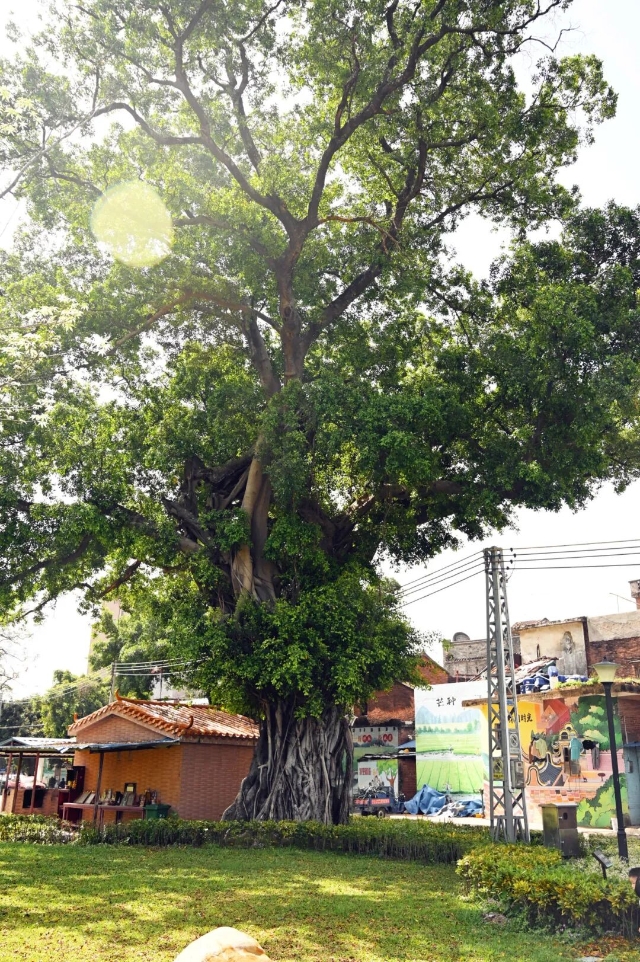
In Dongguan, a major manufacturing hub in Guangdong province, ancient banyan trees serve as more than just greenery. They are landmarks, meeting points, and anchors of community memory.


The city is home to 3,520 officially registered ancient and notable trees, according to the Dongguan Forestry Bureau. A significant number of these are banyans (Ficus microcarpa), with 37 trees aged over 500 years. Scattered across villages, street corners, and parks, their sprawling canopies have shaded generations.
For many residents, these trees shape daily life. The local term "rongshutou" (literally "banyan tree head") refers to the social space beneath a prominent tree, a de facto community centre. People gather there, arrange to meet, or simply pass the time. Traditionally, it has been a spot for casual sports, conversation, and food stalls, with some local dishes named after their rongshutou locations.


"The long tables, stone stools, and street lamps under the big banyan have witnessed the village's changes," wrote one resident, framing the tree as a silent observer of neighbourhood life. It is where news is exchanged, children play, and social bonds are maintained.
In recent years, these trees have become a focus of urban conservation and renewal. Authorities have undertaken preservation work, including filling hollows and controlling pests. Beyond maintenance, many districts are building new public spaces around ancient banyans.


In Houjie's Xinwei community, a 364-year-old banyan is the centrepiece of a new park that includes a basketball court and playground. Wangniudun Town developed an "Ancient Tree Garden" around a 270-year-old specimen. One of the most ambitious projects is a 90,000-square-metre park under construction in Humen Town, designed around a banyan estimated to be 520 years old.


These efforts reflect a broader push to preserve natural landmarks that hold deep social and personal significance, even as the city's rapid urban development continues to reshape its physical landscape.




Author | Feng Huiting
Photo | Dongguan Fabu